
by admin | Aug 18, 2026 | PPC News
Google Ads can be one of the fastest ways to generate leads, sales, bookings, and website traffic. But it can also become expensive very quickly when campaigns are poorly structured or left unchecked. In 2026, competition in paid search remains high, and small mistakes can quietly drain budget before a business sees meaningful results. Whether you manage campaigns yourself or oversee an agency, avoiding the most common PPC mistakes can help you spend smarter and improve return on ad spend.
1. Targeting Keywords That Are Too Broad
One of the fastest ways to waste PPC budget is by targeting keywords that are too general. Broad, high-volume keywords may look attractive because they appear to reach more people, but they often bring in users who are not ready to buy, book, call, or request a quote.
For example, a local accountant bidding on a broad keyword like “tax” may appear for searches related to tax definitions, tax forms, tax news, or tax jobs. Many of those searches are unlikely to become customers. A more focused keyword such as “small business accountant near me” or “tax preparation service in [city]” is more likely to attract someone with commercial intent.
How to avoid this mistake
Review the intent behind each keyword before adding it to a campaign. Prioritise keywords that reflect buyer intent, local intent, or service-specific intent. Use phrase match and exact match where appropriate, and monitor the search terms report regularly to see what people actually searched before clicking your ads.
2. Ignoring Negative Keywords
Negative keywords are one of the most important controls in Google Ads, yet they are often overlooked. Without them, your ads may show for searches that are irrelevant, low value, or completely unrelated to your offer.
For example, a company selling premium office furniture may not want to pay for clicks from people searching for “free office chairs,” “used desks,” or “DIY office furniture plans.” If those terms are not excluded, the campaign may continue spending on users who are unlikely to convert.
How to avoid this mistake
Build a negative keyword list before launching your campaign, then continue refining it every week. Common exclusions may include terms such as “free,” “jobs,” “training,” “PDF,” “template,” “cheap,” or “used,” depending on your business model. The right list will vary by industry, so use your search terms data instead of relying only on generic recommendations.
3. Sending Paid Traffic to a Weak Landing Page
Even a well-written ad cannot fix a poor landing page. If users click your ad and arrive on a slow, confusing, outdated, or irrelevant page, many will leave without taking action. This means you pay for the click but miss the conversion.
A common mistake is sending all PPC traffic to the homepage. While the homepage may explain your business overall, it is rarely the best destination for a specific campaign. A user who clicks an ad for “emergency plumber” expects to see emergency plumbing information immediately, not a general company overview with multiple distractions.
How to avoid this mistake
Create landing pages that match the ad and keyword. The page should clearly explain the service, include trust signals, answer common questions, and make the next step obvious. For lead generation, include a simple form, click-to-call option, or booking button. For ecommerce, make sure product details, delivery information, and checkout steps are easy to understand.
4. Writing Ads Without a Clear Offer or Call to Action
Your ad copy has to do more than describe your business. It needs to give people a reason to click and make it clear what they should do next. Ads that are vague, generic, or too similar to competitors can attract low-quality clicks or be ignored altogether.
For example, an ad that says “Professional Marketing Services” is not as useful as one that explains a specific service, audience, and outcome. Searchers often compare several options quickly, so your message needs to be direct and relevant.
How to avoid this mistake
Focus your ad copy on what matters to the searcher. Mention the service, location if relevant, key benefits, and a clear call to action. Phrases such as “Request a Quote,” “Book a Consultation,” “Call Today,” or “Shop Online” help set expectations. Avoid overpromising, and make sure the landing page supports the message in the ad.
5. Failing to Track Conversions Properly
If conversion tracking is missing or inaccurate, you cannot confidently measure campaign performance. Many businesses judge Google Ads success by clicks, impressions, or average cost per click, but those metrics do not tell the full story. A campaign with cheaper clicks is not necessarily better if those clicks do not generate leads or sales.
Common tracking issues include tracking page views instead of real enquiries, missing phone call tracking, double-counting conversions, or failing to track form submissions correctly. These problems can make campaigns appear more or less profitable than they really are.
How to avoid this mistake
Set up conversion tracking before increasing your budget. Track meaningful actions such as form submissions, phone calls, purchases, appointment bookings, quote requests, or newsletter sign-ups if they have business value. Test each conversion action manually to make sure it records correctly. If your sales process happens offline, create a system for reviewing lead quality after enquiries come in.
6. Using One Campaign for Too Many Services
Another common mistake is placing all services, products, locations, and audiences into one campaign. This may seem easier to manage, but it usually makes performance harder to understand and optimise. Different services often have different costs, conversion rates, competition levels, and customer intent.
For instance, a digital agency might run ads for SEO, web design, PPC management, and social media marketing. If all of these are grouped together, the budget may be consumed by one service while others receive little visibility. It also becomes harder to write highly relevant ads and landing pages.
How to avoid this mistake
Structure campaigns around clear themes. Separate major services, product categories, or locations when they need different budgets, keywords, ads, or landing pages. This gives you better control over spending and makes reporting more useful. Within each campaign, keep ad groups tightly focused so the keyword, ad copy, and landing page all align.
7. Setting Campaigns and Forgetting Them
Google Ads is not a one-time setup task. Search behaviour changes, competitors adjust their bids, landing pages age, and campaign performance can shift over time. A campaign that worked well last quarter may start wasting spend if it is not monitored.
Many PPC budgets are wasted because campaigns are launched and then left alone for weeks or months. During that time, irrelevant search terms may build up, high-performing keywords may be limited by budget, underperforming ads may continue running, and conversion issues may go unnoticed.
How to avoid this mistake
Create a regular optimisation schedule. At minimum, review search terms, conversion data, budget allocation, keyword performance, ad assets, and landing page results. Pause keywords that spend without converting, test new ad messaging, refine negative keywords, and adjust budgets based on actual performance. Small, consistent improvements often produce better results than occasional major changes.
Additional PPC Checks That Can Protect Your Budget
Beyond the seven major mistakes, there are several smaller checks that can make a meaningful difference. Review your location targeting to ensure ads are not showing outside your service area. Check device performance to see whether mobile, desktop, or tablet traffic behaves differently. Make sure your business hours align with when you can respond to calls or enquiries.
It is also worth reviewing your bidding strategy. Automated bidding can be useful, but it needs accurate conversion data and enough context to work effectively. If your tracking is weak or your goals are unclear, bidding automation may optimise toward the wrong outcomes. Before relying heavily on any bid strategy, make sure your campaign foundations are solid.
How Small Businesses Can Spend Smarter in 2026
For small businesses, the goal is not always to spend more on Google Ads. The goal is to spend better. That means focusing on the searches most likely to produce customers, sending traffic to relevant pages, tracking real business outcomes, and making decisions based on data rather than assumptions.
Start by auditing your current campaigns. Look for broad keywords, missing negative keywords, weak landing pages, unclear ad copy, poor conversion tracking, messy campaign structure, and lack of ongoing optimisation. Fixing these issues can often improve performance without increasing your daily budget.
Google Ads can still be a powerful channel in 2026, but success depends on control, relevance, and regular improvement. Businesses that treat PPC as an active marketing system, rather than a set-and-forget advertising tool, are far more likely to turn clicks into customers while keeping wasted spend under control.
by admin | Aug 13, 2026 | Event Marketing
Starting a mobile coffee business can be an exciting way to enter the hospitality industry without the costs associated with opening a permanent café. One of the first decisions you will need to make is whether a coffee bike or coffee cart is the right choice for your business.
Both options can provide an attractive and practical platform for serving coffee at events, markets, workplaces, shopping areas and private functions. However, differences in mobility, available workspace, storage, branding opportunities and cost mean they can suit very different businesses.
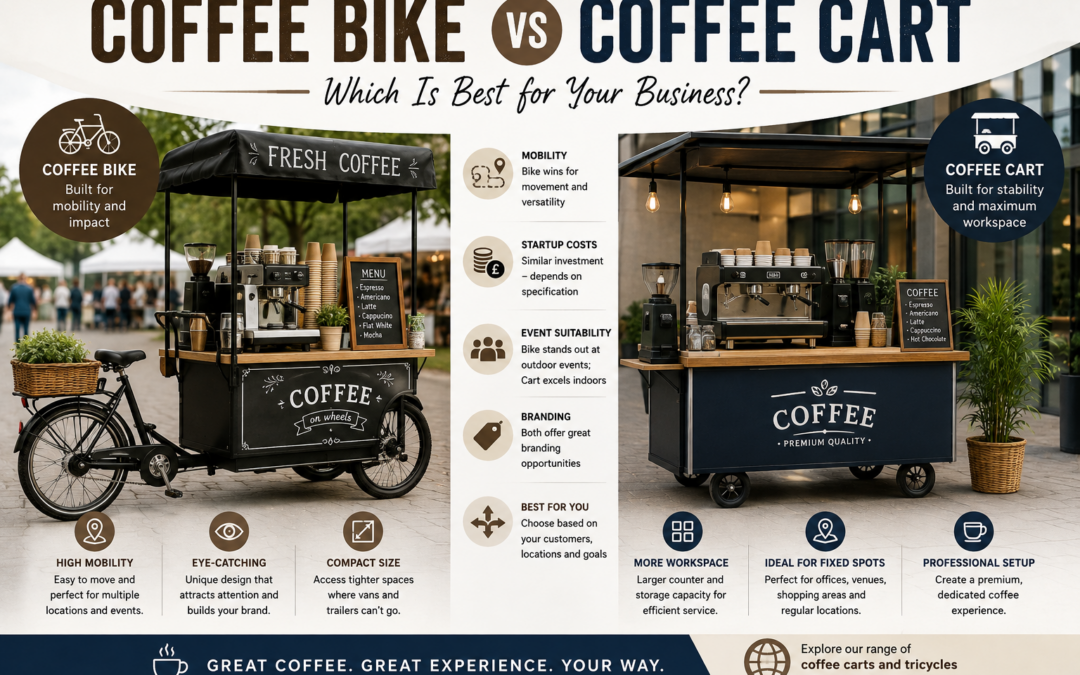
A coffee bike is generally the better choice when mobility and visual impact are priorities, while a coffee cart can provide more working space and flexibility for businesses operating from a relatively fixed location.
Understanding how you intend to trade will help you decide which option offers the best long-term investment.
If you’re currently comparing options, explore Urban Tricycles’ range of coffee carts and tricycles to see the different configurations available.
What Is a Coffee Bike?
A coffee bike is a specially designed tricycle that has been adapted to operate as a mobile coffee station.
Unlike a conventional food van or trailer, a coffee tricycle is compact, distinctive and can be positioned in locations where larger vehicles may be unsuitable.
Depending on its configuration, the bike can incorporate the equipment and storage required for serving coffee and other drinks.
One of its biggest advantages is appearance.
A well-designed coffee bike naturally attracts attention and can become an important part of the branding of a mobile coffee business.
Its unusual format can make it particularly effective at events, exhibitions and busy public spaces where businesses need to stand out.
What Is a Coffee Cart?
A coffee cart provides a dedicated serving station without necessarily incorporating the cycling element of a tricycle.
Carts can be particularly useful for businesses that expect to operate primarily from one location during the trading day.
For example, a coffee cart could be positioned within an office, exhibition, shopping centre, event venue or hospitality environment.
Depending on its design, a cart may provide a larger counter and more room for equipment, ingredients and storage.
For businesses that do not require regular movement between locations during trading, this additional workspace can be a significant advantage.
You can compare different coffee carts and mobile coffee tricycles before deciding which layout best matches your intended business model.
Coffee Bike vs Coffee Cart: What’s the Main Difference?
The biggest difference is mobility.
A coffee bike is specifically designed around a tricycle platform, giving it a distinctive mobile format.
A coffee cart is generally more focused on providing a compact workstation that can be positioned at a chosen trading location.
Neither is automatically better.
The right choice depends on where you intend to trade, how frequently you need to move your setup and how much equipment and storage space your business requires.
For a highly mobile brand attending different events and locations, a coffee bike can be particularly attractive.
For a business operating from a regular pitch or inside a venue, a coffee cart may be the more practical option.
What Are the Advantages of a Coffee Bike?
Mobility
Mobility is one of the most obvious advantages.
Coffee bikes are considerably more compact than vans and trailers, allowing businesses to operate in spaces where larger mobile catering vehicles may be impractical.
This can potentially open up opportunities at events, pedestrian areas, corporate sites and other locations.
Strong Visual Appeal
Coffee bikes are difficult to ignore.
The combination of the tricycle, serving area, equipment and branding creates a distinctive appearance that can help attract customers.
For businesses attending busy events, this visual impact can be particularly valuable.
Branding Opportunities
The body and panels of the bike provide space for branding.
Logos, colours and graphics can transform the tricycle into a highly visible representation of the business.
A branded coffee bike can therefore act as both a sales platform and a marketing tool.
Smaller Footprint
Space is often limited at events and venues.
A compact coffee bike can provide a useful solution when organisers cannot accommodate a full-sized catering vehicle.
What Are the Advantages of a Coffee Cart?
More Focus on Workspace
Coffee carts can be designed around the practical requirements of serving customers.
Depending on the model, this may provide generous counter space and storage for cups, ingredients and other essentials.
Ideal for Fixed Locations
If you intend to trade from the same location for several hours or throughout the working day, the cycling functionality of a tricycle may not be necessary.
A cart can provide a dedicated station that is positioned and prepared for service.
Suitable for Indoor Environments
Coffee carts can work particularly well inside venues such as offices, exhibition centres, hotels and shopping environments.
Their compact footprint can allow businesses to create a coffee service without requiring a conventional café installation.
Professional Presentation
A well-designed cart can create a polished, professional serving area that complements the surrounding venue.
This can be especially valuable for corporate hospitality and premium events.
How Much Does It Cost to Start a Coffee Bike Business?
Startup costs depend heavily on the equipment and specification you choose.
The coffee bike or cart itself is only one part of the overall investment.
You may also need to budget for:
- Coffee machine
- Grinder
- Water system
- Power equipment
- Refrigeration
- Cups and packaging
- Initial coffee and ingredient stock
- Card payment equipment
- Branding and signage
- Insurance
- Licences and registrations
- Transport
- Marketing
Rather than choosing the cheapest platform available, it is worth thinking about the complete setup required to operate efficiently.
Investing in a configuration that matches your intended trading environment can help avoid expensive changes later.
Urban Tricycles’ selection of coffee carts and tricycles provides a useful starting point when planning the physical side of your mobile coffee business.
Which Is Better for Events?
Both can work extremely well at events.
A coffee bike can have an advantage where visual appeal is particularly important.
At festivals, exhibitions, markets and outdoor events, an attractive branded tricycle can help draw attention from people walking past.
Coffee carts can be particularly effective at corporate events, conferences, exhibitions and indoor venues where the business will operate from a designated position.
Consider the types of events you intend to target.
If you expect to attend a mixture of indoor and outdoor events, flexibility should be one of your main priorities when selecting your setup.
Which Is Better for Corporate Coffee?
Coffee carts and bikes can both provide businesses with alternatives to installing a permanent café.
A coffee cart can be positioned in a reception area, office or communal workspace to provide a professional coffee service.
A coffee bike can create a more unusual experience.
This could make it particularly suitable for employee events, promotional campaigns, product launches and corporate hospitality where the presentation of the coffee service is part of the experience.
Which Offers Better Branding Opportunities?
Both provide excellent opportunities for custom branding.
A coffee bike can be particularly eye-catching because the entire structure forms part of the visual identity.
The unusual format also makes branded coffee bikes potentially useful for experiential marketing.
Companies do not necessarily have to operate a dedicated coffee business to use one.
A brand could use a coffee tricycle as part of a promotional event, exhibition or campaign, serving drinks while creating a memorable branded experience.
Coffee carts can also be customised to create a strong branded serving area, particularly in corporate and retail environments.
What About Storage?
Storage is an important practical consideration that can easily be overlooked.
Think about everything required during a typical trading session:
- Coffee beans
- Milk and alternatives
- Cups
- Lids
- Syrups
- Cleaning supplies
- Napkins
- Sugar
- Waste
- Water
- Spare stock
You need enough room to operate efficiently without constantly retrieving supplies from another location.
A larger cart may offer advantages where storage and workspace are priorities.
However, the precise capacity will depend on the individual design and specification, so compare models rather than assuming every cart or tricycle provides the same amount of space.
Think About Power and Water
Serving professional-quality coffee requires more than simply installing an espresso machine.
You need to consider electricity, fresh water and wastewater.
The requirements will depend on your coffee equipment and where you plan to trade.
Some venues may provide convenient access to power, while outdoor events may require a more independent setup.
These practical considerations should be addressed before choosing your cart or bike.
Knowing the equipment you want to operate will help you determine the space, power and water capacity your mobile coffee station requires.
How Important Is Mobility?
Ask yourself what “mobile” actually means for your business.
Do you want to travel between several locations during the same day?
Will the unit remain in one location while you trade and only move between events?
Will it need to operate indoors?
How will you transport it to locations further away?
A coffee bike’s mobility can be a significant advantage, but only if it matches the way you intend to operate.
If your unit will spend most of its time in one fixed location, workspace and serving capacity may be more important considerations.
Coffee Bike or Coffee Cart for a New Business?
For a new independent coffee business, the decision should start with your target customer.
If your plan involves markets, outdoor locations, festivals and events, a coffee tricycle could provide the mobility and distinctive appearance needed to build awareness.
If you already have access to a regular location such as an office building, retail environment or event venue, a coffee cart could provide a practical alternative.
Your budget will also influence the decision, but avoid making price the only consideration.
The most important question is whether the unit will allow you to serve customers efficiently in the locations where you expect to make money.
Which Option Is Right for Your Business?
Choose a coffee bike if mobility, compact dimensions and strong visual impact are central to your business.
It can be particularly effective for:
- Markets
- Festivals
- Outdoor events
- Brand activations
- Weddings
- Promotional events
- Mobile coffee businesses
A coffee cart may be more suitable if workspace and operating from a defined location are your priorities.
It can work particularly well for:
- Offices
- Conferences
- Exhibition venues
- Shopping environments
- Corporate hospitality
- Indoor events
- Regular trading pitches
There will naturally be overlap between the two.
The best option is therefore the one that fits your specific operating model rather than simply the one that looks most impressive.
Build a Mobile Coffee Business That Stands Out
Coffee bikes and coffee carts both provide exciting alternatives to the traditional café model.
They can reduce the need for permanent premises while giving entrepreneurs greater flexibility over where and how they trade.
A coffee bike offers exceptional visual appeal and mobility, while a coffee cart can provide a practical, professional workstation for fixed and semi-permanent locations.
Before making your decision, consider your target customers, locations, available space, equipment, storage requirements and budget.
Planning these elements first makes it much easier to choose a platform that can support the business as it grows.
Explore Urban Tricycles’ range of coffee carts and tricycles to compare the available options and find the right starting point for your mobile coffee business.
by admin | Aug 10, 2026 | AI MARKETING, MARKETING AUTOMATION
Digital marketing changes quickly, but the fundamentals remain the same: understand your audience, create useful content, make it easy for people to take action, and measure what is working. The challenge for many businesses is not knowing which trends deserve attention and which tactics are just noise. A practical marketing plan should help you reach the right people, earn trust, and turn interest into measurable business results.
Build Your Strategy Around Customer Intent
Before choosing channels or campaign formats, start with customer intent. People interact with your brand at different stages: some are discovering a problem, some are comparing solutions, and others are ready to buy or contact you. Your content and campaigns should match these stages rather than treating every visitor the same.
For example, a person searching for “how to improve email open rates” is likely looking for education, while someone searching for “email marketing agency for ecommerce” may be closer to making a decision. Both searches are valuable, but they need different types of content, calls to action, and follow-up.
Map Content to the Buyer Journey
Create a simple content map with three stages: awareness, consideration, and decision. For awareness, publish educational blog posts, guides, short videos, and social content that answer common questions. For consideration, offer comparisons, checklists, case studies, and product or service explainers. For decision, make sure you have clear landing pages, testimonials, FAQs, and contact options.
This approach helps you avoid creating random content and instead build a system that supports people from first visit to conversion.
Refresh Your Website for Better Conversions
Your website is still the center of your digital marketing activity. Social media posts, ads, email campaigns, and search traffic often lead back to your site. If visitors arrive and cannot quickly understand what you offer or what to do next, your campaigns will struggle.
Start by reviewing your most important pages: homepage, service pages, product pages, pricing or inquiry pages, and key blog posts. Each page should have a clear purpose. Remove unnecessary distractions, improve readability, and make calls to action easy to find.
Improve Page Clarity
Every key page should answer these questions quickly:
What do you offer? Who is it for? Why should someone choose you? What should the visitor do next?
If the answers are buried in long blocks of text or vague messaging, revise the page. Use short paragraphs, descriptive headings, bullet points where helpful, and direct calls to action such as “Book a consultation,” “Request a quote,” “Download the guide,” or “Shop the collection.”
Check the Mobile Experience
Many users will first discover your business on a mobile device. Make sure forms are easy to complete, buttons are large enough to tap, menus are simple, and pages load smoothly. A mobile-friendly site is not just about design; it directly affects whether users stay, read, and convert.
Create Content That Answers Real Questions
Content marketing works best when it is useful, specific, and connected to customer needs. Instead of publishing generic updates, focus on questions your audience is already asking. These questions can come from sales calls, customer support messages, search suggestions, community discussions, and social media comments.
A strong content plan should include both timely and evergreen topics. Timely content allows you to respond to industry changes, seasonal demand, or current conversations. Evergreen content continues to provide value over time because it answers ongoing questions.
Use Practical Formats
Helpful content does not need to be complicated. Some of the most effective formats include how-to guides, comparison articles, checklists, buyer guides, troubleshooting posts, FAQs, and step-by-step tutorials. These formats work because they help users solve a problem or make a decision.
When writing content, avoid focusing only on your company. Instead, explain the issue, provide useful guidance, and naturally show how your product or service fits into the solution when relevant.
Strengthen Your Search Visibility
Search remains an important way for people to find businesses, products, and answers. Good search visibility starts with helpful content, but technical and on-page improvements also matter.
Review your website for basic search optimization. Each important page should have a unique title tag, a clear meta description, descriptive headings, internal links, and content that matches the searcher’s intent. Avoid stuffing keywords into pages. Instead, use natural language and cover the topic thoroughly.
Update Older Content
Refreshing existing content is often more efficient than only creating new posts. Review older blog articles and landing pages to make sure the information is current, examples are still relevant, and links still work. Add missing details, improve formatting, and connect the page to newer related content.
Content updates also give you an opportunity to improve calls to action. If a blog post receives traffic but does not encourage visitors to take another step, add a relevant next action such as reading a related guide, joining an email list, or contacting your team.
Use Email to Build Long-Term Relationships
Email marketing remains valuable because it gives you a direct way to communicate with people who have chosen to hear from you. Unlike social platforms where visibility can change, your email list is an owned audience that you can nurture over time.
To make email more effective, segment your list based on interests, behavior, or customer stage. New subscribers may need educational content, while past customers may respond better to product updates, loyalty messages, or helpful usage tips.
Send Emails With a Clear Purpose
Each email should have one main goal. That goal might be to drive traffic to a new article, encourage event registration, promote a product, request feedback, or educate subscribers about a service. Keep the message focused and make the call to action obvious.
Consistency is more important than volume. Choose a schedule you can maintain and focus on delivering value in every message.
Make Social Media More Strategic
Social media can support awareness, trust, customer engagement, and website traffic, but it works best with a clear plan. Posting simply to stay active often leads to weak results. Instead, define the role each platform plays in your marketing strategy.
For example, one platform may be best for community building, another for short educational content, and another for visual storytelling. Choose platforms based on where your audience spends time and how they prefer to engage.
Balance Content Types
A strong social content mix usually includes educational posts, brand stories, customer-focused content, product or service highlights, behind-the-scenes updates, and direct calls to action. If every post is promotional, audiences may tune out. If no posts invite action, social engagement may not support business goals.
Track which formats lead to saves, shares, comments, clicks, and inquiries. Use those insights to improve future posts rather than relying on assumptions.
Measure What Matters
Digital marketing becomes more effective when you measure the right things. Vanity metrics can be useful for spotting interest, but they do not tell the full story. Focus on metrics connected to your goals, such as qualified leads, sales inquiries, conversion rates, email signups, repeat visits, and revenue-related actions.
Set up tracking for important website actions, including form submissions, phone clicks, downloads, bookings, and purchases where applicable. Review performance regularly so you can identify what is improving and what needs adjustment.
Turn Reports Into Decisions
A report is only useful if it leads to action. If a landing page gets traffic but few conversions, test the headline, offer, form length, or call to action. If an email has strong clicks, consider creating more content around that topic. If a campaign brings traffic that does not engage, revisit your audience targeting or message.
Small, consistent improvements often create better results than occasional major changes.
Create a Simple Monthly Marketing Checklist
To keep your strategy organized, use a monthly checklist. Review website performance, update one or two key pages, publish new content, refresh older content, send email campaigns, evaluate social media results, and check lead quality. This routine keeps your marketing active without becoming overwhelming.
Also schedule time to review customer feedback. The language customers use can improve your ad copy, website messaging, blog topics, and email subject lines. Your audience often tells you exactly what they care about; your job is to listen and respond with useful marketing.
Final Thoughts
A successful digital marketing strategy does not need to chase every new tactic. It needs clear goals, useful content, strong website experiences, consistent communication, and regular measurement. By focusing on customer intent and improving each part of your marketing system, you can build campaigns that attract the right audience and support meaningful business growth.

by admin | Jun 15, 2026 | Education
Learning Mandarin can feel like a daunting challenge for children, especially when they are introduced to a completely new set of sounds, tones, and vocabulary. However, one of the most effective and enjoyable ways to help young learners acquire Mandarin naturally is through educational cartoons. Animated content combines visual storytelling, repetition, and engaging characters to create an immersive language-learning experience that feels more like entertainment than study.
For parents looking to support their child’s Chinese language journey, cartoons can be a powerful tool that improves listening comprehension, vocabulary retention, pronunciation, and overall confidence. Platforms such as HiHiLulu have recognised the value of animated learning by offering children access to Chinese cartoons, songs, stories, and interactive activities that encourage natural language acquisition through immersion.
Why Cartoons Are Effective for Mandarin Learning
Children learn languages differently from adults. Rather than memorising grammar rules and vocabulary lists, they absorb language through repeated exposure, context, and meaningful interaction. Educational cartoons provide exactly this type of environment.
When children watch Mandarin cartoons, they hear native speakers using authentic language in everyday situations. Visual cues such as facial expressions, actions, and objects help them understand meaning even when they do not know every word. This mirrors the way children learn their first language, making Mandarin feel more natural and accessible.
The combination of sound, imagery, and storytelling also keeps children engaged for longer periods, increasing the amount of language they are exposed to without feeling overwhelmed.
Improving Listening Comprehension
One of the biggest challenges for Mandarin learners is developing strong listening skills. Mandarin is a tonal language, meaning the same syllable can have different meanings depending on how it is pronounced.
Cartoons expose children to native pronunciation, natural speech patterns, and common sentence structures. As children repeatedly hear words and phrases in different episodes, their brains begin to recognise familiar sounds and patterns.
Unlike traditional classroom exercises, animated content presents language within meaningful contexts. For example, a cartoon character asking for food, greeting a friend, or describing the weather provides visual support that helps children connect spoken Mandarin with real-world situations.
Over time, this repeated exposure improves listening comprehension and helps children understand Mandarin more intuitively.
Boosting Vocabulary Retention
Repetition is essential for language learning, and cartoons naturally provide it. Popular children’s programmes often repeat key words, phrases, and themes throughout episodes.
Young learners may hear words such as colours, numbers, animals, family members, and everyday objects multiple times while watching their favourite characters. Because these words are linked to memorable stories and visual experiences, they are often retained more effectively than vocabulary learned through flashcards alone.
Educational Mandarin cartoons frequently focus on specific themes, allowing children to build vocabulary in logical categories. This helps strengthen word associations and makes it easier for children to recall language when they need it.
Interactive platforms that combine cartoons with games and activities can further reinforce vocabulary by encouraging children to actively use what they have learned. HiHiLulu, for example, combines animated content with interactive learning experiences designed to support vocabulary development and language progression.
Supporting Better Pronunciation
Pronunciation can be one of the most difficult aspects of learning Mandarin, particularly because of its four main tones.
Children are naturally skilled at imitating sounds they hear regularly. Watching Mandarin cartoons allows them to listen to native speakers and copy accurate pronunciation in a low-pressure environment. Songs, rhymes, and repeated phrases are especially useful because they encourage children to speak along with characters and practise tone patterns.
The earlier children are exposed to authentic Mandarin pronunciation, the more likely they are to develop accurate speaking habits and avoid common pronunciation mistakes later on.
Choosing Age-Appropriate Mandarin Cartoons
Not all Mandarin content is equally suitable for every child. Parents should choose cartoons that match their child’s age, language level, and interests.
For younger children, simple stories with clear visuals, repetitive language, and slower speech are often the best choice. Programmes featuring songs, everyday routines, and basic vocabulary help establish strong language foundations.
Older children may benefit from cartoons with more complex storylines, wider vocabulary, and cultural themes that encourage deeper language understanding.
When selecting Mandarin cartoons, parents should consider:
- Age-appropriate themes and content
- Clear and accurate Mandarin pronunciation
- Educational value alongside entertainment
- Engaging characters and storylines
- Opportunities for repetition and interaction
A curated learning platform can make this process much easier by organising content according to language level and educational goals.
Combining Cartoons with Structured Learning Activities
While cartoons are highly effective, they work best when combined with structured language-learning activities.
Parents can maximise learning by discussing episodes with their children after viewing. Asking simple questions in Mandarin, reviewing new vocabulary, or encouraging children to describe their favourite characters can reinforce language comprehension.
Other useful activities include:
- Creating vocabulary lists from favourite episodes
- Practising key phrases together
- Singing Mandarin songs featured in cartoons
- Playing interactive language games
- Reading related Chinese picture books
These activities transform passive viewing into active language practice and help children transfer new vocabulary into everyday use.
Creating a Fun Mandarin Learning Environment
Perhaps the greatest advantage of educational cartoons is that they make language learning enjoyable. When children associate Mandarin with fun stories, engaging characters, and positive experiences, they are more likely to stay motivated and continue learning.
A consistent routine that combines animated content with interactive practice can help children build confidence and develop strong language skills over time. With the right resources and support, Mandarin becomes less of a subject to study and more of a language to experience.
Educational cartoon platforms such as HiHiLulu provide children with immersive Chinese-language content designed to make learning engaging, progressive, and enjoyable. By combining high-quality animation with structured learning opportunities, parents can help their children develop Mandarin skills faster while fostering a genuine love of language learning.
by admin | May 13, 2026 | Exhibitions & Events
In today’s competitive marketplace, brands are no longer judged solely on the quality of their products or services. Consumers expect experiences. Whether at a trade show, festival, product launch or corporate event, businesses must create memorable interactions that connect with audiences on a deeper level.
Immersive brand experiences have become one of the most powerful ways to capture attention, build emotional connections and leave lasting impressions. From custom-built exhibition stands to large-scale live events, companies are investing heavily in experiential marketing to stand out in crowded environments.
This is where experienced production and exhibition specialists such as Taylex Group play an essential role. With expertise in exhibition stand design, live event production and brand activations, the company helps brands transform ideas into engaging real-world experiences that audiences genuinely remember.
Why Immersive Experiences Matter
Modern consumers are exposed to thousands of marketing messages every single day. Digital advertising, social media campaigns and email marketing all compete for attention, making it increasingly difficult for brands to cut through the noise.
Experiential marketing changes that dynamic by creating moments people can physically interact with. Rather than simply seeing an advert online, audiences can engage directly with a brand through carefully designed environments, interactive displays and live experiences.
Research consistently shows that people are more likely to remember experiences than traditional advertisements. An immersive activation allows visitors to connect emotionally with a brand, helping businesses increase awareness, trust and long-term loyalty.
This is especially important at exhibitions and trade shows, where companies only have a few seconds to attract visitors. A visually striking and thoughtfully designed exhibition stand can dramatically increase footfall and engagement.
The Importance of Creative Exhibition Stand Design
Exhibition spaces are highly competitive environments. Hundreds of brands often compete side by side for attention, making creative stand design essential.
A successful exhibition stand should do more than look impressive. It needs to reflect the brand’s identity, encourage interaction and guide visitors through a carefully planned customer journey.
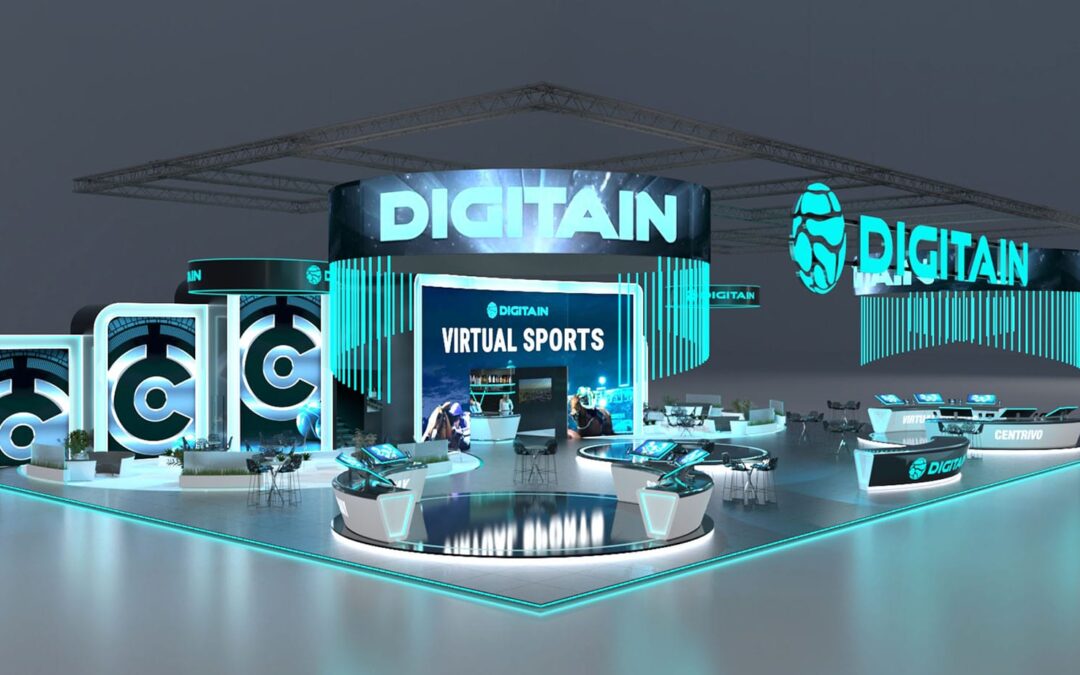
According to Taylex Group, the most effective exhibition stands combine creativity with functionality. From initial 3D visualisations and conceptual design through to technical drawings and final construction, every detail contributes to the visitor experience.
Lighting, AV integration, signage, layout and structural design all play a role in creating an environment that feels immersive and engaging. When these elements work together effectively, they can transform a standard exhibition stand into a memorable brand destination.
Many brands are now moving away from traditional shell schemes in favour of bespoke exhibition builds that offer unique visual impact and enhanced visitor interaction. Double-deck stands, modular systems and large-format LED displays are becoming increasingly popular for businesses wanting to maximise visibility at major events.
Storytelling Through Brand Activations
One of the key elements of immersive marketing is storytelling. Audiences are far more likely to engage with a brand when they feel emotionally connected to its message.
Brand activations allow businesses to tell their story in creative and engaging ways. Instead of simply promoting products, brands can create experiences that communicate their values, identity and purpose.
Successful activations often include:
- Interactive technology
- Experiential zones
- Live demonstrations
- Multi-sensory design
- Social media integration
- Audience participation
At festivals, exhibitions and product launches, immersive activations encourage visitors to spend more time engaging with the brand. This increases both memorability and the likelihood of social sharing, extending the experience beyond the event itself.
Companies such as Taylex Group specialise in transforming creative concepts into fully realised live experiences, managing everything from fabrication and staging to AV production and event logistics.
The Rise of Sustainable Event Experiences
Sustainability has also become a major consideration in experiential marketing and exhibition design. Many businesses are now seeking environmentally responsible ways to create impactful event experiences without excessive waste.
Reusable exhibition systems, modular builds and recyclable materials are increasingly being integrated into event production strategies. Sustainable exhibition solutions not only reduce environmental impact but also align brands with the growing consumer demand for responsible business practices.
Taylex Group’s investment in sustainable exhibition systems, including beMatrix modular stand solutions, reflects a wider industry shift towards greener event production methods.
For brands attending multiple exhibitions throughout the year, reusable systems also offer long-term cost efficiencies while maintaining premium visual quality.
Technology Is Enhancing Audience Engagement
Technology continues to redefine what immersive brand experiences can achieve. Interactive displays, LED walls, projection mapping and digital touchpoints are helping brands create more engaging and dynamic environments.
Large-scale AV production is now a central feature of many live events and exhibition stands. High-resolution screens, immersive lighting and integrated sound design can dramatically enhance the atmosphere of a space while reinforcing key messaging.
For example, complex exhibition builds featuring large LED installations and interactive digital experiences have become increasingly common at international trade shows and corporate events.
When combined with strong creative design, technology helps brands create experiences that feel modern, innovative and highly shareable.
Delivering Experiences That Leave Lasting Impressions
Creating immersive brand experiences requires far more than attractive visuals. It involves strategic planning, creative thinking, technical expertise and flawless execution.
From conceptual design and fabrication to live event production and installation, every stage must work together seamlessly to deliver an experience that audiences remember positively.
As experiential marketing continues to grow, businesses that invest in high-quality live experiences will have a significant advantage in building brand recognition and customer loyalty.
With extensive experience across exhibitions, conferences, festivals and brand activations, Taylex Group continues to help brands create impactful experiences across the UK, Europe and the Middle East. By combining creativity, production expertise and innovative technology, immersive experiences can become far more than marketing tools — they become meaningful moments that audiences genuinely remember.
