
by admin | Sep 7, 2026 | Digital Marketing News, Uncategorized
First-party data is becoming one of the most valuable assets in digital marketing. As browsers, platforms, and consumers move away from broad third-party tracking, businesses need more reliable ways to understand their audiences, personalize campaigns, and measure performance. For small businesses, marketers, and website owners, this shift is not just a technical change. It is a strategic opportunity to build stronger customer relationships, improve campaign efficiency, and reduce dependence on outside platforms.
What First-Party Data Means for Digital Marketing
First-party data is information your business collects directly from people who interact with your brand. This can include website behavior, email sign-ups, purchase history, customer feedback, form submissions, account preferences, event registrations, and interactions with your customer support team.
Unlike third-party data, which is collected and shared by outside companies, first-party data comes from your own audience. That makes it more relevant, more accurate, and more useful for building marketing campaigns that reflect real customer intent.
For example, a local service business may learn which pages visitors read before submitting a quote request. An ecommerce store may understand which products customers buy together. A B2B company may see which lead magnets attract the most qualified prospects. These insights help businesses move from generic marketing to more focused, customer-led strategy.
Why First-Party Data Is Becoming More Important
Digital marketing has long relied on third-party cookies, platform targeting, and external audience data. However, that approach is becoming less dependable. Consumers are more aware of how their information is used, browsers are limiting tracking options, and advertising platforms are changing how data can be collected and measured.
This does not mean digital marketing is becoming less effective. It means businesses need to rely more on data they collect transparently and directly. First-party data gives marketers a more stable foundation because it is built from actual interactions with their own customers and prospects.
For small businesses, this is especially important. Many smaller brands do not have the budget to waste on broad campaigns that reach the wrong people. By using first-party data well, they can make smarter decisions about content, advertising, email marketing, website improvements, and customer retention.
How First-Party Data Changes Marketing Strategy
It Shifts the Focus From Reach to Relationships
Traditional digital marketing often prioritized reaching as many people as possible. First-party data encourages a different mindset: understand the people already engaging with your business and serve them better.
This changes how campaigns are planned. Instead of only asking, “How can we get more traffic?” marketers also ask, “What do returning visitors need?” “Which customers are most likely to buy again?” and “What content helps prospects take the next step?”
For website owners, this means paying closer attention to user journeys. A visitor who reads three comparison pages may need different messaging than someone landing on a basic service page for the first time. A subscriber who opens every newsletter may be ready for a stronger offer than someone who has not engaged recently.
It Improves Personalization Without Guesswork
Personalization works best when it is based on meaningful behavior, not assumptions. First-party data helps businesses tailor messages, offers, and website experiences based on what people actually do.
An online retailer can send product recommendations based on past purchases. A consultant can segment email subscribers by the topics they downloaded. A fitness studio can promote beginner classes to new leads and advanced programs to returning customers.
The goal is not to make marketing feel intrusive. The goal is to make it more relevant. When customers receive information that matches their needs, they are more likely to engage. Good personalization should feel helpful, timely, and easy to understand.
It Makes Email and Customer Databases More Valuable
Email marketing is becoming more important as businesses look for channels they can manage directly. A strong email list, customer relationship management system, or subscriber database gives a business a direct line to its audience.
However, collecting email addresses is only the first step. The real value comes from organizing and using that data properly. Businesses should understand where subscribers came from, what they are interested in, how often they engage, and what actions they take after receiving messages.
For example, a website owner might separate subscribers who joined through a discount offer from those who signed up for educational content. Those groups may need different follow-up campaigns. One may respond well to promotions, while the other may need trust-building content before becoming a customer.
Practical Ways to Collect First-Party Data
Use Website Forms Strategically
Forms are one of the simplest ways to collect first-party data. Contact forms, quote requests, newsletter sign-ups, surveys, booking forms, and gated resources can all provide useful insight.
The key is to ask for information that has a clear purpose. A long form can reduce submissions if it feels unnecessary. A short form can increase conversions but may not give your sales or marketing team enough context. Businesses should balance convenience with usefulness.
For many small businesses, starting with a name, email address, reason for inquiry, and one qualifying question is enough. Over time, additional information can be collected through follow-up emails, customer conversations, or account preferences.
Track Meaningful Website Behavior
Website analytics can reveal what visitors care about before they ever contact your business. Important signals include which pages attract qualified visitors, which content leads to conversions, where users drop off, and which calls to action generate engagement.
Rather than focusing only on total traffic, marketers should look at behavior that connects to business goals. A blog post with modest traffic may be highly valuable if it consistently leads to consultation requests. A high-traffic page may need improvement if visitors leave without taking action.
Small businesses should review website behavior regularly and use those insights to update page copy, improve navigation, add clearer calls to action, and create content that answers common customer questions.
Encourage Account Creation and Preferences
For businesses with ecommerce stores, membership sites, booking systems, or customer portals, account-based data can be especially useful. Customers may share preferences, order history, saved services, favorite products, or communication choices.
This information can improve both marketing and customer experience. For example, a customer who regularly books the same service may appreciate reminders. A shopper who buys a specific product category may be interested in related items. A member who has not logged in recently may need a re-engagement message.
Businesses should make account features genuinely useful. If customers see a benefit, they are more likely to share preferences and keep their information updated.
Using First-Party Data Across Marketing Channels
Search Engine Optimization
First-party data can improve SEO by showing what your audience actually wants to know. Search query reports, internal site search data, form questions, support tickets, and sales conversations can all inspire useful content.
If customers repeatedly ask the same questions before buying, those questions can become blog posts, FAQ sections, service page updates, or comparison guides. This helps attract visitors who are already looking for answers and improves the usefulness of your website.
Paid Advertising
First-party data can make paid campaigns more focused. Businesses can use customer lists, conversion data, and website engagement signals to refine targeting, exclude existing customers from certain campaigns, or create messaging for different stages of the buying journey.
For example, a campaign for new prospects may focus on education, while a campaign for past customers may highlight repeat services or complementary products. This helps reduce wasted spend and makes ad messaging more relevant.
Email Marketing
Email is one of the most practical channels for applying first-party data. Segmentation can be based on interests, purchase behavior, location, engagement level, or lead source.
A simple segmented approach often works better than sending every subscriber the same message. New subscribers may need a welcome series. Active customers may need helpful tips or related offers. Inactive subscribers may need a reason to re-engage or update their preferences.
Website Experience
First-party data can also guide website improvements. If analytics show that users frequently visit pricing, testimonials, or comparison pages before converting, those elements may deserve more visibility. If visitors abandon a form, it may need to be shorter or clearer.
Website owners should use data to remove friction. Clearer navigation, stronger calls to action, more relevant landing pages, and better mobile experiences can all improve results without requiring a larger marketing budget.
Building Trust While Collecting Data
First-party data works best when customers understand what they are sharing and why. Businesses should be clear about how information is collected and used. Forms should explain the value of signing up, and communication preferences should be easy to manage.
Trust is a competitive advantage. People are more likely to engage with brands that respect their time, protect their information, and send relevant messages. Over-collecting data or sending too many promotional emails can damage that trust.
A practical approach is to collect only what you need, keep it organized, and use it to improve the customer experience. Every data point should have a purpose, whether it helps personalize communication, improve service, or measure marketing performance.
How Small Businesses Can Get Started
Businesses do not need a complex system to begin using first-party data. Start by identifying the most important customer actions on your website, such as calls, form submissions, purchases, bookings, downloads, or email sign-ups.
Next, make sure those actions are being tracked accurately. Review your forms, analytics setup, email platform, and customer database. Look for gaps, duplicate records, or information that is being collected but never used.
Then, create a few simple audience segments. These might include new leads, past customers, high-intent website visitors, newsletter subscribers, or customers interested in a specific service. Build campaigns around those segments instead of sending the same message to everyone.
Finally, review performance regularly. First-party data becomes more valuable over time when it is used to test, learn, and improve. Even small adjustments to landing pages, email sequences, or ad messaging can lead to better outcomes.
The Future of Digital Marketing Is More Direct
First-party data is reshaping digital marketing by putting the customer relationship back at the center of strategy. Instead of relying heavily on outside tracking and broad audience assumptions, businesses can use their own data to understand real behavior, improve relevance, and build long-term loyalty.
For small businesses and website owners, the most important step is to start collecting and using data with intention. Clear forms, useful content, organized customer records, and thoughtful email campaigns can create a strong foundation. As digital marketing continues to evolve, the businesses that know their audiences best will be better positioned to adapt, compete, and grow.

by admin | Sep 1, 2026 | Digital Marketing News, Uncategorized
Personalization is becoming a central priority for digital marketing teams as customers expect more relevant experiences across websites, email, search, social media, and ecommerce journeys. For small businesses and website owners, this shift is not just about using advanced tools; it is about understanding visitors, responding to their needs, and removing friction from the path to enquiry, booking, or purchase.
Why Personalization Is Moving to the Center of Digital Marketing
Digital marketing has become more competitive across nearly every channel. Customers are comparing options quickly, moving between devices, and expecting brands to understand their intent. A generic message that treats every visitor the same is less likely to stand out, especially when competitors are tailoring content, offers, and recommendations based on user behavior.
Personalization helps businesses make marketing feel more useful. Instead of showing the same homepage banner, email promotion, or product recommendation to everyone, marketers can adapt messaging based on location, past engagement, purchase history, referral source, search intent, or stage in the customer journey.
For small businesses, personalization does not need to be complicated. Even simple improvements, such as sending different email follow-ups to new leads and existing customers, can make campaigns more relevant. The key is to focus on helpful experiences rather than overly intrusive targeting.
What Personalized Marketing Looks Like in Practice
Personalization can appear in many parts of a digital marketing strategy. It may involve changing website content for returning visitors, segmenting email lists, recommending related products, or adjusting landing page copy based on the campaign that brought someone to the site.
Website Content That Matches Visitor Intent
A website can be more effective when it reflects why a visitor arrived. Someone coming from a local search may need directions, opening hours, service areas, and trust signals. A visitor arriving from a comparison article may need proof, case studies, testimonials, and a clear explanation of what makes the business different.
Website owners can start by reviewing their highest-traffic pages and asking whether each page answers the most likely visitor questions. If a service page is attracting first-time visitors, it may need more educational content. If a product page attracts returning visitors, it may need clearer pricing information, delivery details, or stronger calls to action.
Email Segmentation and Follow-Up
Email remains one of the most practical areas for personalization. Instead of sending every subscriber the same message, businesses can segment lists by interest, customer type, purchase behavior, or enquiry history.
For example, a local service provider might send different content to homeowners, landlords, and commercial clients. An online store might separate first-time buyers from repeat customers. A consultant might send educational content to new leads and more detailed service information to prospects who have already booked a call.
The goal is to make each email feel timely and useful. Better segmentation can also reduce unsubscribes because subscribers are less likely to receive irrelevant messages.
Product and Service Recommendations
Recommendations are another practical use of personalization. Ecommerce stores can suggest related products, complementary items, or replenishment reminders. Service businesses can recommend relevant guides, consultations, or add-on services based on what a visitor has already viewed.
These recommendations should be genuinely helpful. If someone reads a blog post about preparing a garden for winter, a landscaping company might recommend a seasonal maintenance service or a downloadable checklist. If a visitor browses a specific software feature, a technology provider might highlight a relevant demo or comparison page.
How Small Businesses Can Prepare Their Data
Effective personalization depends on clean, useful, and responsibly collected data. Many businesses already have valuable information available through website analytics, customer relationship management systems, email platforms, booking tools, ecommerce platforms, and customer support records.
Start With First-Party Data
First-party data is information collected directly from customers and website visitors through your own channels. This may include newsletter sign-ups, purchase history, enquiry forms, account preferences, and on-site behavior.
Small businesses should prioritize first-party data because it is more relevant to their audience and less dependent on external platforms. It also encourages better customer relationships, as users are sharing information directly with the business.
Keep Data Organized
Personalization becomes difficult when customer information is scattered across different tools. A business may have email data in one platform, sales notes in another, and website analytics somewhere else. This can lead to inconsistent messaging and missed opportunities.
Even a basic customer database can help. Businesses should aim to keep records updated, remove duplicate contacts, tag customers by interest or service type, and document where leads came from. The cleaner the data, the easier it becomes to create useful audience segments.
Ask for Preferences Clearly
One of the simplest ways to personalize marketing is to ask customers what they want. Preference centers, sign-up forms, and onboarding questionnaires can help businesses understand which topics, services, or products matter most to each person.
For example, a fitness studio could ask subscribers whether they are interested in group classes, personal training, nutrition advice, or beginner programs. A web design agency could ask leads whether they need a new website, redesign, maintenance, or search visibility support.
Balancing Personalization With Privacy
Personalization should build trust, not create discomfort. Customers are more likely to respond positively when they understand why they are seeing certain content and when the experience feels helpful rather than invasive.
Businesses should be transparent about data collection, use clear consent options where required, and avoid collecting information they do not need. Privacy policies should be easy to find and written in plain language. Forms should only ask for details that are genuinely useful for the customer journey.
Marketers should also avoid overly specific messaging that makes users feel watched. For example, reminding a customer about a product category they viewed may be helpful, while referencing every action they took on the website may feel excessive. The best personalization often feels natural and supportive.
Personalization Across Key Marketing Channels
Search and Content Marketing
Personalization can improve content strategy by helping marketers create resources for different audience segments. A business may need separate content for beginners, advanced buyers, local customers, industry professionals, or returning customers.
Website owners can review search queries, internal site searches, sales questions, and customer support requests to identify content gaps. Blog posts, FAQs, comparison pages, and buying guides can then be developed around real customer needs.
Paid Advertising
In paid campaigns, personalization often starts with matching ads and landing pages to audience intent. A campaign targeting emergency service enquiries should lead to a fast, direct landing page with phone contact options. A campaign targeting early-stage research should lead to educational content and softer conversion options, such as a guide download or consultation request.
Small businesses should avoid sending all paid traffic to the homepage. More specific landing pages usually provide a clearer message, reduce confusion, and make it easier to track what is working.
Social Media
Social media personalization is less about one-to-one messaging and more about creating content for specific audience groups. A business can develop different post themes for new followers, loyal customers, local audiences, and people comparing options.
Comments, direct messages, polls, and engagement patterns can reveal what followers care about. Marketers can use this insight to adjust content calendars, answer common objections, and highlight the most relevant products or services.
Practical Steps to Get Started
Small businesses do not need to overhaul their entire marketing system at once. A phased approach is usually more manageable and easier to measure.
1. Identify Key Customer Segments
Start with a few meaningful groups. These might include new visitors, returning customers, high-value clients, local prospects, abandoned cart users, or leads interested in a specific service. Avoid creating too many segments at the beginning, as this can become difficult to manage.
2. Map the Customer Journey
Consider what each segment needs at different stages. A new visitor may need education and trust signals. A returning lead may need proof and a clear next step. An existing customer may need support, upgrades, or loyalty-focused communication.
3. Improve One Channel First
Choose one area where personalization can have a clear impact. Email is often a strong starting point because most platforms support segmentation and automated follow-ups. Website landing pages and paid campaign messaging are also practical places to begin.
4. Test and Refine
Personalization should be reviewed regularly. Track engagement, enquiries, purchases, bookings, and customer feedback. If a message is not performing, adjust the content, timing, offer, or audience segment.
What This Means for Marketing Teams
As personalization becomes a core focus, marketing teams will need to work more closely with sales, customer service, web development, and data management. The most effective strategies will come from shared knowledge about customer questions, objections, preferences, and behavior.
For small businesses, the opportunity is clear: more relevant marketing can lead to better customer experiences and stronger relationships. The businesses that succeed will be those that use personalization to be more helpful, more timely, and more aligned with what their customers actually need.
by admin | Aug 25, 2026 | Uncategorized, Web Design News
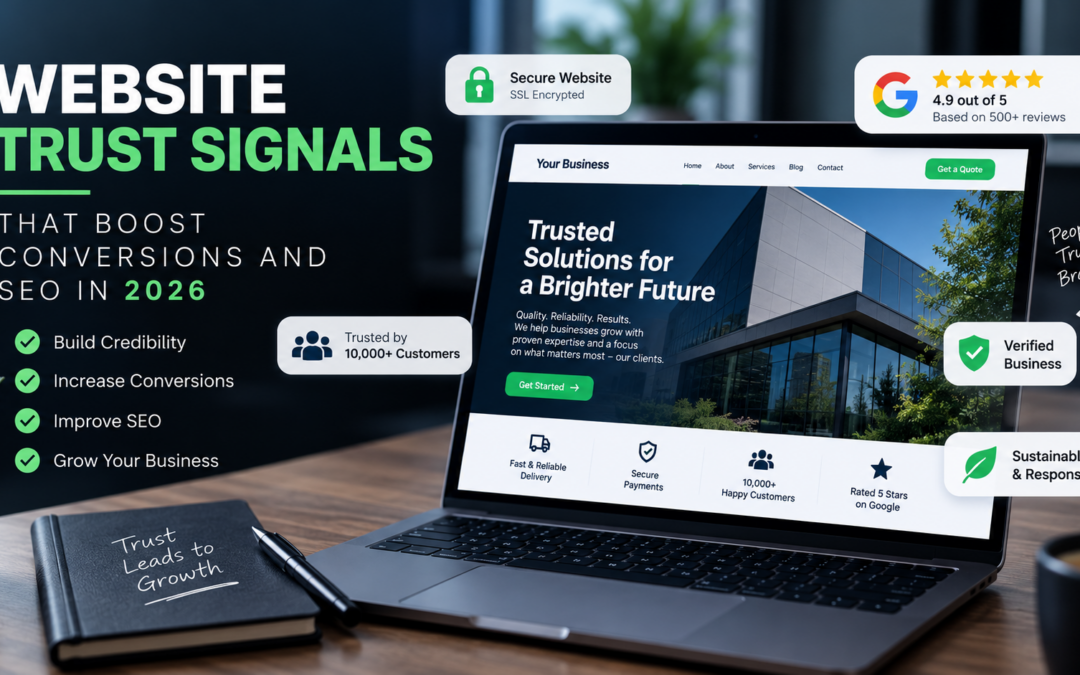
Trust is one of the most important factors influencing whether a visitor becomes a lead, customer, subscriber, or repeat buyer. In 2026, website owners need to think about trust signals as more than design details. They affect how users judge a brand, how comfortable they feel taking action, and how search engines interpret the quality and credibility of a site. For small businesses and marketers, improving trust signals can support both conversion rate optimisation and long-term SEO performance.
Why Website Trust Signals Matter in 2026
Online users are more selective than ever. Before submitting a form, booking a consultation, or buying a product, they look for signs that a business is legitimate, reliable, and easy to contact. If those signals are missing, even strong traffic can fail to convert.
Search engines also reward websites that provide helpful, transparent, and trustworthy experiences. While trust signals are not always direct ranking factors on their own, they support many areas that influence SEO, including user engagement, content quality, brand reputation, and website usability.
A trustworthy website reduces hesitation. It answers common questions, shows proof of credibility, and removes uncertainty at key decision points. The result is a smoother journey from landing page to conversion.
Clear Contact Information
One of the simplest trust signals is also one of the most overlooked: clear contact information. Visitors want to know that a real business is behind the website. A visible phone number, email address, contact form, business address, and opening hours can all help build confidence.
For local businesses, consistent contact details are especially important. Your name, address, and phone number should match across your website, Google Business Profile, directories, and social platforms. Inconsistent information can confuse customers and weaken local SEO signals.
Practical tips for better contact trust
Add contact details to your header, footer, and contact page. If you serve a specific area, include that location information naturally on relevant pages. Make sure forms are easy to use, confirmation messages are clear, and users know when to expect a response.
Secure and Professional Website Experience
A secure website is a baseline expectation. If visitors see browser warnings, broken pages, outdated layouts, or suspicious pop-ups, they are unlikely to stay. Security and professionalism directly influence how people perceive your business.
Every business website should use HTTPS, keep software updated, remove broken links, and ensure forms work correctly. These elements support both trust and technical SEO. A site that loads properly, protects user information, and feels professionally maintained is more likely to keep visitors engaged.
Design consistency also matters. Fonts, colours, spacing, images, and calls to action should feel intentional. A cluttered or outdated design can make a business appear less credible, even if the service itself is excellent.
Authentic Reviews and Testimonials
Customer reviews are among the most powerful trust signals because they provide social proof. People want to know whether others have had a positive experience before they take the next step.
For service businesses, testimonials can help explain the quality of your work, communication style, and results. For ecommerce websites, product reviews can reduce uncertainty around quality, delivery, sizing, or suitability.
Reviews should be authentic, specific, and easy to find. Avoid vague testimonials that simply say “great service” without context. Stronger testimonials explain the customer’s problem, the solution provided, and why they were satisfied.
Where to place reviews
Add testimonials to key landing pages, service pages, product pages, and checkout or enquiry areas. If you collect reviews on third-party platforms, link to those profiles where appropriate. This helps visitors verify feedback and adds credibility beyond your own website.
Detailed About Page and Brand Story
Your About page is often one of the most visited pages by users who are considering whether to trust your business. A generic About page is a missed opportunity. Instead, use it to explain who you are, what you do, who you help, and why your business exists.
For small businesses, a personal and transparent About page can be a major advantage. Introduce the founder, team members, values, experience, and approach. If relevant, include professional photos rather than relying only on stock imagery.
Search engines aim to understand the people and organisations behind websites. A clear About page supports that understanding while helping users feel more confident in your brand.
Author Bios and Content Credentials
If your website publishes guides, blog posts, advice, or industry commentary, visitors should know who created the content. Author bios help establish expertise and accountability, especially in industries where decisions involve money, health, legal issues, property, or professional services.
An effective author bio does not need to be long. It should explain the author’s role, experience, and relevant background. If multiple team members contribute content, create individual author pages where readers can see more of their work.
This is particularly useful for SEO-focused content strategies. Helpful content is stronger when it is connected to real knowledge, practical experience, and a clearly identified source.
Transparent Policies and Terms
Trust also comes from transparency. Users should be able to find your privacy policy, terms and conditions, returns policy, delivery information, cancellation policy, or booking terms without searching too hard.
For ecommerce businesses, unclear returns or delivery information can cause cart abandonment. For service businesses, unclear payment terms or cancellation rules can create friction before enquiry or booking.
Place policy links in the footer and include key details on relevant conversion pages. For example, an online shop should show delivery and returns information close to product and checkout areas. A consultancy or appointment-based business should explain booking steps clearly before the user commits.
Strong Case Studies and Portfolio Examples
Case studies and portfolio examples help potential customers understand what you can actually deliver. They are especially valuable for agencies, consultants, trades, designers, developers, and B2B service providers.
A useful case study should explain the client’s challenge, your approach, and the outcome in a way that is accurate and easy to understand. You do not need to share confidential data or make exaggerated claims. The goal is to show your process, problem-solving ability, and the type of work you handle.
For visual businesses, before-and-after examples, screenshots, project galleries, or videos can be effective. For professional services, summaries of challenges and solutions may be more appropriate.
Recognisable Payment, Checkout, and Form Signals
Conversion points need extra trust. When a visitor reaches a checkout, quote form, booking form, or download form, they are making a decision that involves personal information, money, or time.
Make forms simple and explain why you need the information requested. Avoid asking for unnecessary details. Add reassurance near the form, such as response times, secure processing messages, privacy notes, or links to relevant policies.
For ecommerce sites, show accepted payment methods clearly, explain shipping costs before the final step where possible, and avoid surprise charges. A smooth and transparent checkout experience can reduce hesitation and improve completed purchases.
High-Quality Content That Answers Real Questions
Trust is not only built through design elements. Content plays a central role. Helpful, accurate, and well-structured content shows that your business understands customer needs.
In 2026, thin pages written only to target keywords are unlikely to perform well. Small businesses should focus on answering real questions that customers ask before buying. This can include pricing considerations, service comparisons, process explanations, maintenance tips, buying guides, and common mistakes to avoid.
Strong content can improve search visibility while supporting conversions. A visitor who finds clear answers on your site is more likely to see your business as knowledgeable and reliable.
Content trust checklist
Review important pages and ask whether they clearly explain who the page is for, what problem it solves, what the next step is, and why the visitor should trust your business. Update outdated information and remove claims that cannot be supported.
Consistent Branding Across Channels
Users often interact with a business across several channels before converting. They may find you through search, visit your website, check social media, read reviews, and return later through a paid ad or email.
Consistent branding across these touchpoints helps build familiarity. Your logo, tone of voice, business description, services, contact details, and visual style should align across your website, social profiles, directory listings, email templates, and advertising campaigns.
Inconsistency can create doubt. If your website says one thing but your profiles say another, visitors may question whether the business is active or reliable.
Fast Loading and Mobile-Friendly Pages
Performance is a trust signal. Slow pages frustrate visitors and can make a website feel outdated. Mobile experience is especially important because many users research, compare, and contact businesses from their phones.
Make sure pages load quickly, buttons are easy to tap, text is readable, images are optimised, and menus are simple to use. A strong mobile experience supports SEO and makes it easier for users to convert without friction.
Small improvements can have a meaningful impact. Compress oversized images, remove unnecessary plugins, simplify page layouts, and test key conversion paths on different devices.
How to Audit Your Website Trust Signals
Start by reviewing your most important pages: homepage, service pages, product pages, About page, contact page, and checkout or enquiry forms. Look at each page from the perspective of a first-time visitor who does not know your business.
Ask whether the page clearly shows who you are, what you offer, how to contact you, why you are credible, and what the visitor should do next. Check for missing reviews, weak calls to action, outdated content, broken links, unclear policies, or poor mobile usability.
It can also help to ask customers or team members what questions they had before making a purchase or enquiry. Use those questions to improve page content and reduce uncertainty.
Final Thoughts
Website trust signals are not just cosmetic additions. They influence how visitors feel, how easily they make decisions, and how search engines understand the quality of your site. In 2026, businesses that combine transparent information, strong content, secure browsing, authentic reviews, and smooth user experience will be better positioned to convert traffic into customers.
For small businesses and marketers, the best approach is to start with the basics: make your business easy to verify, easy to contact, and easy to buy from. Trust grows when every page removes doubt and gives visitors a clear reason to take the next step.
by admin | Aug 24, 2026 | SEO News, Uncategorized
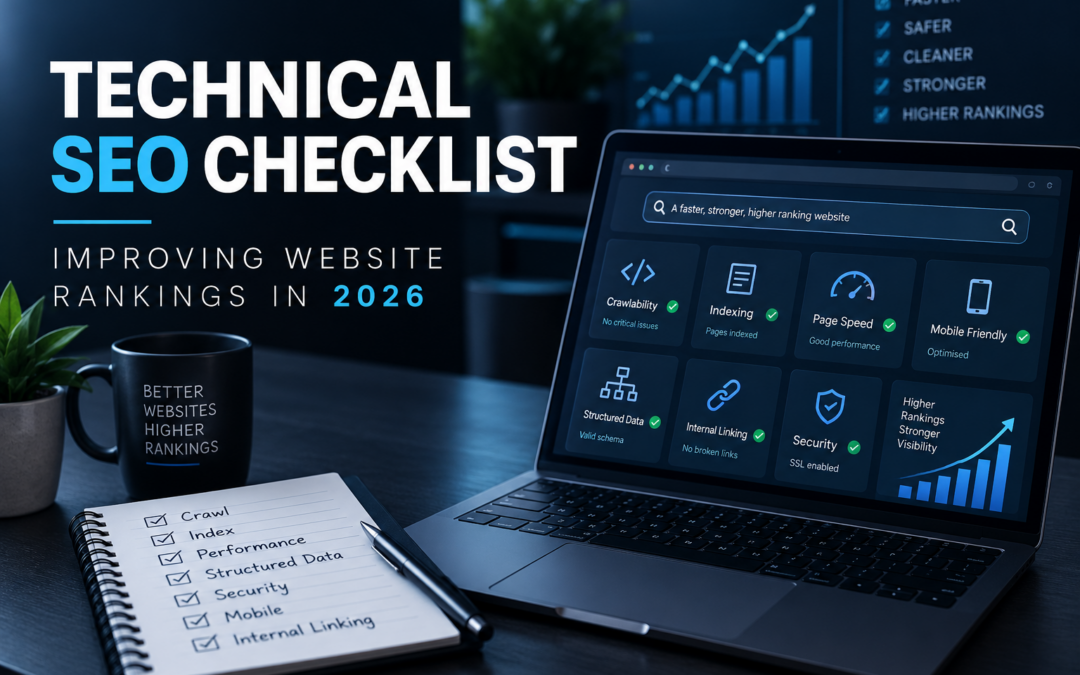
Technical SEO is the foundation that helps search engines crawl, understand, and rank your website. Even the best content can struggle to perform if pages load slowly, links are broken, indexing is mismanaged, or your site is difficult to use on mobile devices. For small businesses, marketers, and website owners, a practical technical SEO checklist can help uncover issues that quietly hold back rankings and organic traffic.
As search results continue to become more competitive in 2026, technical SEO should not be treated as a one-time project. It is an ongoing process of improving website performance, usability, crawlability, and search visibility. Use the checklist below to review your site and prioritize the updates that can have the biggest impact.
1. Check That Search Engines Can Crawl Your Website
Before your pages can rank, search engines need to be able to discover and crawl them. Crawlability issues can prevent important pages from appearing in search results, even if the content is strong.
Review Your Robots.txt File
Your robots.txt file tells search engine crawlers which areas of your site they can or cannot access. Check that you are not accidentally blocking important sections such as service pages, blog posts, product categories, or images. It is common for staging-site rules or development settings to remain in place after a website launch, so review this file carefully.
Fix Broken Internal Links
Broken links waste crawl budget and create a poor user experience. Run a crawl of your website and identify internal links that return 404 errors or redirect unnecessarily. Update broken links to point to the correct live pages, and remove links that no longer serve a purpose.
Improve Internal Linking
Internal links help search engines understand the structure of your website and the relationship between your pages. Link from relevant blog posts to key service pages, product pages, or important guides. Use descriptive anchor text that clearly explains what the linked page is about, rather than vague phrases such as “click here.”
2. Make Sure Important Pages Are Indexed
Indexing determines whether your pages can appear in search results. A page may be crawlable but still not indexed if there are technical signals telling search engines to exclude it.
Check Indexing Status
Use Google Search Console to review which pages are indexed and which are excluded. Pay attention to important landing pages, product pages, local pages, and blog content. If valuable pages are not indexed, investigate whether the issue is related to noindex tags, canonical tags, duplicate content, redirects, or low-quality content.
Use Noindex Tags Carefully
Noindex tags are useful for pages that should not appear in search results, such as thank-you pages, internal search result pages, or certain filtered pages. However, they can cause problems if applied to pages that should rank. Review your templates and plugins to ensure noindex settings are not being applied too broadly.
Submit an Accurate XML Sitemap
Your XML sitemap helps search engines discover your most important URLs. Make sure your sitemap includes only canonical, indexable pages that return a successful status code. Remove redirected pages, broken URLs, duplicate pages, and pages blocked by robots.txt. Submit the sitemap in Google Search Console and keep it updated as your site changes.
3. Improve Website Speed and Core Web Vitals
Page experience matters for both users and search performance. A slow website can increase bounce rates, reduce conversions, and make it harder for visitors to engage with your business.
Compress Images
Large image files are one of the most common causes of slow pages. Compress images before uploading them, use appropriate file formats, and avoid displaying images larger than necessary. For websites with many blog posts or product images, image optimization can make a noticeable difference.
Reduce Unnecessary Scripts
Marketing tags, tracking scripts, plugins, pop-ups, and third-party tools can slow down a website. Review the scripts running on your pages and remove anything that is no longer needed. If a plugin or tool is essential, make sure it loads efficiently and does not block the page from rendering.
Use Caching and a Reliable Hosting Setup
Caching helps pages load faster for returning visitors and reduces server strain. A reliable hosting environment is also important, especially for ecommerce websites, local business websites with booking tools, or sites with frequent traffic spikes. If your website regularly feels slow, hosting and server performance should be reviewed alongside on-page optimization.
4. Prioritize Mobile Usability
Most users now interact with websites on mobile devices, so your site needs to be easy to navigate, read, and use on smaller screens. Mobile usability is not just about design; it affects how visitors engage with your content and complete actions such as calling, booking, purchasing, or submitting a form.
Test Key Pages on Real Devices
Do not rely only on desktop previews or responsive design tools. Open your key pages on actual mobile devices and test the experience. Check whether menus work properly, buttons are easy to tap, forms are simple to complete, and text is readable without zooming.
Avoid Intrusive Elements
Pop-ups, banners, cookie notices, and chat widgets can interfere with mobile usability if they cover important content or are difficult to close. Make sure these elements do not block navigation, contact buttons, product details, or form fields.
Keep Layouts Clean and Simple
Mobile visitors often want quick answers. Use clear headings, concise paragraphs, visible calls to action, and simple navigation. A clean mobile layout helps users find what they need and encourages them to stay longer on your site.
5. Strengthen Site Architecture
A well-organized website makes it easier for search engines and users to understand your content. Good site architecture also helps distribute authority to important pages.
Use a Clear URL Structure
URLs should be short, readable, and descriptive. Avoid long strings of parameters when possible. For example, a URL that includes a clear category and page topic is easier to understand than one filled with random numbers or session IDs.
Group Related Content Logically
Organize your website into clear sections, such as services, products, locations, resources, or blog categories. If you publish content regularly, build topic clusters around important themes. This helps search engines connect related pages and can improve the visibility of your most valuable content.
Keep Important Pages Close to the Homepage
Important pages should not be buried too deeply. If users need many clicks to reach a key service or product page, search engines may also treat that page as less important. Use navigation menus, footer links, category pages, and contextual internal links to make priority pages easier to find.
6. Fix Duplicate Content and Canonical Issues
Duplicate content can confuse search engines about which version of a page should rank. This is especially common on ecommerce websites, websites with filters, and sites that use multiple URL variations.
Use Canonical Tags Correctly
A canonical tag tells search engines which version of a page is the preferred one. Check that canonical tags point to the correct final URL. Avoid pointing canonicals to redirected pages, non-indexable pages, or unrelated content.
Review HTTP, HTTPS, WWW, and Non-WWW Versions
Your website should resolve to one preferred version. For example, if your preferred version is HTTPS with “www,” all other versions should redirect to it. Inconsistent versions can create duplicate content and split signals across multiple URLs.
Control Filter and Parameter Pages
Filtered pages can create many URL variations with similar content. For ecommerce or directory-style websites, decide which filtered pages deserve to be indexed and which should be blocked, canonicalized, or noindexed. This keeps search engines focused on the pages that matter most.
7. Implement Structured Data Where Relevant
Structured data helps search engines understand specific details about your content. While it does not guarantee enhanced search results, it can improve how your pages are interpreted.
Add Schema for Key Page Types
Consider structured data for local businesses, products, reviews, FAQs, articles, events, and breadcrumbs where appropriate. Use only markup that accurately reflects visible content on the page. Misleading or irrelevant markup can create problems and should be avoided.
Validate Your Markup
After adding structured data, test it with available validation tools to check for errors or missing fields. Revisit your markup whenever templates, plugins, or page layouts change.
8. Improve Security and Trust Signals
Technical SEO also includes making sure your website is secure and trustworthy. Visitors are less likely to engage with a site that triggers browser warnings or feels outdated.
Use HTTPS Across the Entire Site
Your website should use HTTPS on every page, not just checkout or contact pages. Check for mixed content issues, where secure pages load insecure images, scripts, or stylesheets. Mixed content can cause browser warnings and reduce user confidence.
Keep Software and Plugins Updated
Outdated themes, plugins, and content management systems can create performance and security issues. Maintain a regular update schedule, back up your website before major updates, and remove plugins you no longer use.
9. Monitor Redirects and 404 Errors
Redirects are a normal part of website maintenance, but poor redirect management can slow down crawling and frustrate users.
Use 301 Redirects for Moved Pages
When a page permanently moves, use a 301 redirect to send users and search engines to the new location. This is especially important during redesigns, domain changes, URL restructuring, or content consolidation.
Avoid Redirect Chains
A redirect chain happens when one URL redirects to another, which then redirects again. These chains slow down page loading and make crawling less efficient. Update old redirects so they point directly to the final destination.
Create a Helpful 404 Page
A custom 404 page should help users recover when they land on a missing page. Include links to popular sections, a search option, or a clear path back to your homepage. This improves usability and can reduce lost traffic.
10. Track Technical SEO Regularly
Technical SEO is not something to check once and forget. Websites change over time as new pages are added, plugins are installed, campaigns launch, and old content is removed.
Schedule Routine Audits
Run a technical SEO audit at least periodically, especially after major website updates. Check crawl errors, indexing changes, speed issues, mobile usability, sitemap accuracy, and structured data errors. Small issues are easier to fix before they become larger problems.
Use Search Console Data
Google Search Console can reveal indexing issues, page experience concerns, sitemap problems, and search performance trends. Review the data consistently and investigate sudden drops in impressions, clicks, or indexed pages.
Document Website Changes
Keep a simple record of major changes such as redesigns, URL updates, plugin installations, content pruning, or hosting migrations. Documentation makes it easier to connect technical changes with ranking or traffic shifts.
Final Thoughts
A strong technical SEO foundation helps your content, products, and services perform better in search. For small businesses and website owners, the most important step is to focus on practical improvements: make your site crawlable, indexable, fast, mobile-friendly, secure, and easy to navigate.
By reviewing this checklist regularly, you can prevent technical problems from limiting your rankings and create a better experience for both search engines and visitors. In 2026, websites that combine useful content with clean technical execution will be better positioned to compete for organic visibility.

by admin | Aug 19, 2026 | PPC News, Uncategorized
Google Ads can be one of the fastest ways to generate leads, sales, calls, and website traffic, but it can also waste budget quickly when campaigns are not structured or monitored properly. In 2026, small businesses and marketers need to be especially careful with targeting, match types, landing pages, tracking, and automation settings. The platform offers powerful tools, but those tools need clear direction. Here are the most common Google Ads mistakes that drain PPC budgets and how to fix them.
Using Broad Targeting Without Enough Control
One of the biggest budget-wasting mistakes is targeting too widely. Many advertisers launch campaigns with broad keywords, large geographic areas, and minimal audience refinement. This can cause ads to appear for searches that are only loosely related to the business.
For example, a local plumbing company may want emergency plumbing leads in one city, but a poorly configured campaign could show ads to people searching for plumbing jobs, DIY repair guides, or services outside the company’s service area.
How to fix it
Review your campaign targeting carefully before increasing spend. Use location targeting that matches your actual service area, not just places where people show interest. If you are a local business, check whether your ads are targeting people “in” your chosen locations rather than people merely “interested in” them.
Segment campaigns by service, product type, or location where possible. This gives you more control over budgets, ads, keywords, and landing pages. A campaign for high-value services should not share the same structure as a campaign for low-margin or informational searches.
Ignoring Search Terms Reports
Keywords are what you bid on, but search terms are what people actually type into Google. Many advertisers make the mistake of setting up campaigns and rarely checking the search terms report. This is where wasted spend often hides.
You may discover that your ads are appearing for irrelevant phrases, competitor research, job seekers, free resources, or searches from users who are not ready to buy. If these terms are not managed, the campaign keeps spending on traffic that is unlikely to convert.
How to fix it
Check search terms regularly, especially during the first few weeks of a campaign. Add irrelevant queries as negative keywords. For example, terms like “free,” “jobs,” “salary,” “template,” “course,” or “DIY” may be poor fits for many service-based campaigns, depending on your goals.
Create a shared negative keyword list for common exclusions and apply it across relevant campaigns. This is especially useful for businesses running multiple campaigns in similar categories.
Sending Paid Traffic to Weak Landing Pages
Even a well-built Google Ads campaign can waste money if the landing page does not support the visitor’s intent. Sending users to a generic homepage is often less effective than sending them to a focused page that matches the ad and keyword.
A user who clicks an ad for “commercial roof repair” expects to land on a page about commercial roof repair, not a general roofing homepage with multiple unrelated services. When the message is unclear, visitors leave, and the click cost is wasted.
How to fix it
Create landing pages that match the campaign theme. The page should clearly explain the offer, service, location, benefits, process, and next step. Include visible calls to action such as phone numbers, quote forms, booking buttons, or contact links.
Make sure the landing page loads quickly, works well on mobile devices, and removes unnecessary distractions. A simple, focused page often performs better than a cluttered page with too many choices.
Not Tracking Conversions Correctly
Running Google Ads without reliable conversion tracking is like spending money without knowing what worked. Many advertisers track clicks but fail to track form submissions, phone calls, purchases, booking requests, newsletter signups, or other meaningful actions.
Another common problem is tracking the wrong conversions. For example, counting every page view as a conversion can make campaign performance look better than it really is. This leads to poor optimization decisions.
How to fix it
Set up conversion tracking for actions that directly support your business goals. For lead generation, this may include completed forms, calls from ads, calls from the website, appointment bookings, and quote requests. For ecommerce, this should include purchases and revenue where appropriate.
Review your conversion settings to make sure only valuable actions are marked as primary conversions. Secondary actions can still be useful for analysis, but your main bidding decisions should be based on meaningful results.
Choosing the Wrong Bidding Strategy
Google Ads offers several bidding strategies, but choosing the wrong one can waste budget. Some advertisers switch to conversion-focused bidding before they have enough reliable conversion data. Others use manual bidding but never adjust bids based on performance.
Automated bidding can be useful, but it needs accurate tracking, realistic goals, and enough campaign history to work effectively. If the data going into the system is weak, the results can be weak too.
How to fix it
Match your bidding strategy to your campaign stage. New campaigns may need a testing period to gather data. Once you have consistent conversion tracking and enough performance history, conversion-focused bidding strategies can become more useful.
Avoid changing bid strategies too frequently. Give campaigns enough time to adjust, then review performance based on cost per lead, return on ad spend, conversion quality, and actual business outcomes.
Forgetting About Negative Keywords
Negative keywords are one of the simplest ways to protect your PPC budget, yet they are often neglected. Without them, your ads may show for searches that include your target keywords but have the wrong intent.
For example, a business selling premium office furniture may not want clicks from searches containing “used,” “cheap,” “free,” or “repair.” A law firm may want to exclude people searching for legal definitions or law school topics. Every business has different exclusions.
How to fix it
Build negative keyword lists before launching campaigns, then expand them as data comes in. Look for patterns in irrelevant traffic and add negatives at the campaign or ad group level depending on how specific they are.
Be careful not to overuse negative keywords. Adding broad negatives without reviewing context can accidentally block valuable searches. Use them thoughtfully and review performance after changes.
Using One Campaign for Everything
Many small businesses start with one campaign that includes every product, service, and location. This makes the account easier to launch but harder to manage. When everything is grouped together, budget often goes to the highest-volume searches rather than the most profitable ones.
It also becomes difficult to write relevant ads, set accurate bids, and send users to the right landing pages. A campaign covering too many topics usually produces weaker performance data.
How to fix it
Separate campaigns by major business goal, location, service category, or product group. This allows you to control budgets more effectively. If one service generates better leads, you can allocate more spend to it. If another service performs poorly, you can reduce or pause it without disrupting the rest of the account.
Within each campaign, use tightly themed ad groups. Each ad group should have keywords, ads, and landing pages that closely match each other.
Writing Generic Ad Copy
Generic ads often lead to low engagement and poor-quality clicks. If your ad says the same thing as every competitor, users have little reason to choose your business. Weak ad copy can also attract the wrong audience if it does not clearly explain what you offer.
In 2026, search results are competitive, and users compare options quickly. Your ad needs to communicate relevance, credibility, and a clear next step.
How to fix it
Write ads that match the search intent and landing page. Include the service or product name, location if relevant, and a clear benefit. Use calls to action such as “Request a Quote,” “Book a Consultation,” “Shop Online,” or “Call Today,” depending on your goal.
Test multiple headlines and descriptions. Highlight what makes your business useful, such as fast response times, specialist services, flexible appointments, local experience, or easy online booking. Only include claims you can genuinely support.
Neglecting Mobile Users
Many Google Ads clicks come from mobile devices, especially for local services, urgent needs, and quick purchases. If your website is difficult to use on a phone, you may pay for clicks that never become leads or sales.
Common mobile problems include slow pages, small buttons, hard-to-read text, long forms, pop-ups that block content, and phone numbers that are not clickable.
How to fix it
Test your ads and landing pages on a mobile device. Make sure the page loads quickly, the main message appears near the top, and users can call, submit a form, or complete a purchase without frustration.
Keep forms short where possible. Ask for the information you need to start the conversation, not every detail upfront. For local or service-based businesses, make phone calls and booking buttons easy to find.
Not Reviewing Budget Allocation
Another common mistake is setting a daily budget and leaving it unchanged for months. Campaign performance changes over time due to seasonality, competition, search behavior, website updates, and business priorities.
If you do not review budget allocation, you may keep funding campaigns that produce low-quality leads while limiting campaigns that generate better results.
How to fix it
Review spend by campaign, ad group, keyword, location, device, and conversion type. Look beyond clicks and impressions. Focus on which areas produce valuable leads, sales, or inquiries.
Move budget toward campaigns that support business goals and reduce spend on areas with poor conversion quality. If a campaign gets many leads but few become customers, investigate the search terms, ad copy, landing page, and lead qualification process.
Making Too Many Changes at Once
Optimization is important, but changing too many settings at the same time can make it difficult to understand what improved or hurt performance. Advertisers sometimes adjust keywords, bids, ads, landing pages, locations, and budgets all in one day, then struggle to interpret the results.
How to fix it
Make changes in a controlled way. Prioritize the biggest issues first, such as broken tracking, irrelevant search terms, poor landing pages, or wasted spend in the wrong locations. Record major changes so you can connect performance shifts to specific actions.
Give campaigns enough time to collect meaningful data before judging results. Some changes need more time than others, especially budget, bidding, and landing page adjustments.
Final Thoughts
Google Ads can deliver strong results for small businesses, marketers, and website owners, but only when campaigns are managed with clear goals and regular attention. The most expensive mistakes usually come from poor tracking, broad targeting, weak landing pages, irrelevant search terms, and unclear campaign structure.
To protect your PPC budget in 2026, focus on relevance, measurement, and ongoing refinement. Track the actions that matter, review search terms, use negative keywords, improve landing pages, and allocate budget based on real business value. Small improvements in these areas can make your campaigns more efficient and help every click work harder.
