
Can Primary Schools Teach Mandarin Without a Chinese-Speaking Teacher?
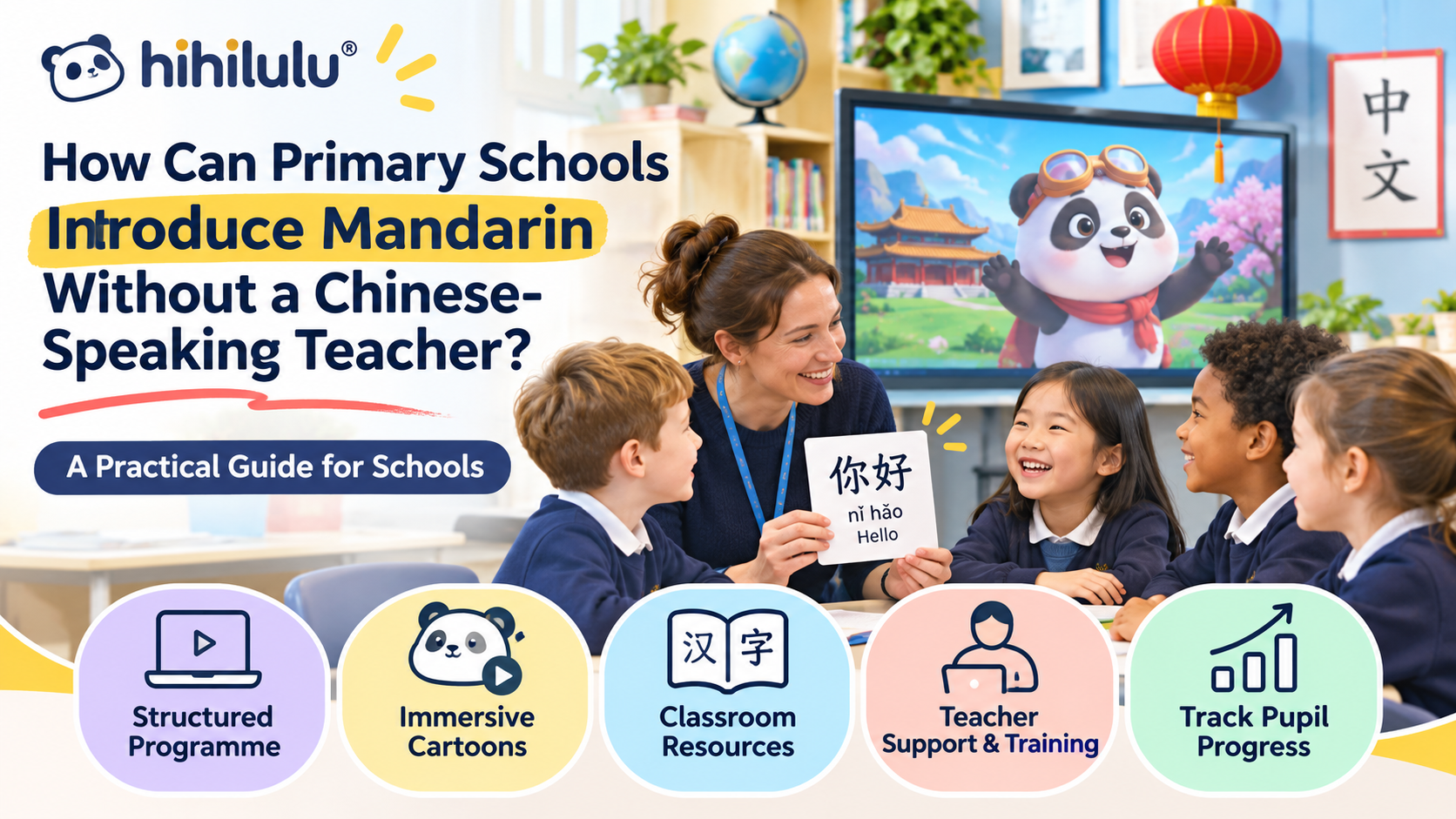
Yes, primary schools can introduce Mandarin without employing a full-time Chinese-speaking teacher by using structured digital learning programmes, immersive cartoons, age-appropriate classroom resources and support from qualified Mandarin educators. These approaches allow schools to introduce Chinese language learning while helping existing teachers confidently support classroom activities.
For many primary schools, the biggest challenge is not a lack of interest in Mandarin but finding suitably qualified teaching staff.
Fortunately, modern educational technology makes it easier to introduce Chinese language programmes without placing additional pressure on existing teaching teams.
Through platforms such as hihilulu for Schools, schools can access structured Mandarin programmes, immersive learning materials and specialist teaching support designed for young learners.
Why Should Primary Schools Introduce Mandarin?
Introducing Mandarin at primary school gives children an opportunity to explore a new language, discover different cultures and develop communication skills from an early age.
Young learners can become familiar with Mandarin pronunciation, tones and vocabulary through songs, stories and interactive activities.
Learning Chinese also introduces children to a writing system that differs considerably from English, encouraging them to recognise patterns, symbols and character structures.
For schools, Mandarin can provide:
-
Greater diversity within the languages curriculum.
-
Opportunities to explore Chinese culture and traditions.
-
Engaging cross-curricular learning activities.
-
Early exposure to an internationally important language.
-
A foundation for further language study.
A well-designed Chinese language programme for schools should prioritise enjoyment, participation and gradual progression rather than expecting children to master complex vocabulary immediately.
How Can Schools Set Up a Mandarin Programme Without a Specialist Teacher?
The most practical approach is to begin with a structured programme that provides teaching materials, lesson guidance and access to accurate spoken Mandarin.
Schools can choose between a classroom-supported digital programme, remote teaching from qualified Mandarin specialists or an externally delivered programme.
Step 1: Choose the Right Programme
Start by identifying the age groups involved, available teaching time and desired learning outcomes.
For younger pupils, the emphasis should be on listening, speaking, songs and visual recognition.
Older primary pupils can gradually introduce simple sentences, character recognition and written activities.
The hihilulu school programme offers flexible options, including structured weekly lessons, after-school clubs and holiday programmes.
Schools can select an approach that suits their timetable, resources and educational objectives.
Step 2: Use a Structured Curriculum
A structured curriculum helps ensure lessons build on previous knowledge.
Rather than introducing unrelated vocabulary each week, children should revisit familiar words and gradually develop their understanding.
hihilulu uses its Snowballing Method, developed with Chinese language expert Professor Joël Bellassen.
The approach introduces core Chinese character components before progressively building towards complete characters, words and sentences.
This provides a systematic approach to Chinese literacy alongside listening and speaking activities.
hihilulu
Step 3: Provide Teacher Support
Classroom teachers do not necessarily need to speak Mandarin fluently to help organise activities, supervise digital learning and encourage participation.
However, access to accurate pronunciation models and specialist guidance remains important.
Through hihilulu Academy, educators can access teaching resources, professional development and training opportunities.
Schools should establish clear responsibilities for language instruction, classroom support and assessment before launching their programme.
What Should a Primary School Mandarin Lesson Look Like?
Mandarin lessons should be interactive, manageable and appropriate for pupils’ ages and abilities.
A practical 30-minute introductory lesson could follow this structure:
| Activity | Duration |
|---|---|
| Welcome and familiar Mandarin greetings | 5 minutes |
| Watch an immersive Mandarin cartoon | 5 minutes |
| Introduce three to five new words | 5 minutes |
| Interactive game, song or movement activity | 10 minutes |
| Review vocabulary and celebrate progress | 5 minutes |
This is an illustrative lesson structure rather than a fixed curriculum requirement.
For Key Stage 1 pupils, shorter activities and frequent repetition can help maintain engagement.
For Key Stage 2 pupils, lessons can gradually introduce longer conversations, basic sentence structures and Chinese characters.
A real example is the hihilulu after-school programme at Thomas’s Clapham in London, where Years 1 and 2 receive 30-minute weekly sessions, while Years 3 and 4 receive 60-minute sessions.
hihilulu
How Can Immersive Cartoons Help Children Learn Mandarin?
Immersive cartoons introduce children to Mandarin through familiar characters, stories and everyday situations.
Rather than learning vocabulary exclusively through translation, pupils hear words used naturally within meaningful contexts.
For example, a cartoon about animals could introduce Mandarin words for different creatures, colours and movements.
Teachers can reinforce this vocabulary through flashcards, questions, drawing activities and classroom games.
The hihilulu Chinese cartoon library provides animated content designed to support language exposure through entertaining stories.
How Should Teachers Use Cartoons in the Classroom?
Cartoons are most effective when combined with active learning.
A simple approach involves watching a short animation, discussing the story, practising selected Mandarin words and completing a related activity.
Children can then watch the animation again to recognise familiar vocabulary.
This approach helps transform screen time into a structured learning experience.
hihilulu has previously demonstrated how cartoons can support theme-based language teaching through classroom activities combining animation, discussion, vocabulary practice and games.
hihilulu
What Mandarin Teaching Resources Do Primary Schools Need?
Schools introducing Mandarin should prioritise resources that are easy to use and suitable for different learning styles.
Useful classroom materials include:
-
Flashcards: Reinforce vocabulary through pictures and Chinese characters.
-
Animated videos: Introduce natural spoken Mandarin and contextual learning.
-
Songs and rhymes: Encourage pronunciation practice and repetition.
-
Interactive games: Support vocabulary recognition and participation.
-
Worksheets: Provide opportunities to practise character recognition and writing.
-
Teaching guides: Help staff deliver consistent, structured lessons.
The hihilulu Atelier school platform combines digital lessons with physical learning materials, including flashcards and educational puzzles.
Meanwhile, hihilulu Academy for teachers provides access to lesson plans, teaching guides, worksheets, video tutorials and professional training.
These resources can help schools introduce Mandarin without developing an entire curriculum from scratch.
How Can Schools Measure Progress in Mandarin?
Progress should be assessed according to pupils’ ages, starting abilities and learning objectives.
For younger children, success may involve recognising common greetings, responding to simple instructions or identifying familiar vocabulary.
Older pupils may begin constructing short sentences, recognising Chinese characters and participating in basic conversations.
Schools can monitor progress through classroom observation, interactive assessments and regular vocabulary reviews.
The hihilulu school learning platform includes progress reporting tools that allow schools to monitor learning outcomes and engagement.
This can be particularly valuable when senior leaders do not speak Mandarin themselves.
Primary School Mandarin Implementation Checklist
Before launching a Chinese language programme, schools should consider the following:
Mandarin programme checklist
0 of 9 completed
Frequently Asked Questions About Teaching Mandarin in Primary Schools
Can a teacher who doesn’t speak Mandarin teach Chinese?
A non-Mandarin-speaking teacher can support introductory Chinese learning using structured resources, recorded native-speaker audio and specialist guidance. However, qualified Mandarin educators should provide appropriate support for pronunciation, progression and language accuracy.
What age should children start learning Mandarin?
Children can begin exploring Mandarin during their early years through songs, stories, games and listening activities. Formal learning should be adapted to their age, development and abilities.
How many Mandarin lessons should primary schools offer?
A weekly lesson can provide a useful starting point, particularly when supported by short revision activities. Regular exposure and repetition are important for retaining vocabulary and developing confidence.
Can Mandarin be taught online in primary schools?
Yes. Online Mandarin programmes can provide structured lessons, interactive activities and access to qualified teachers without requiring schools to recruit a full-time specialist.
Do primary schools need expensive equipment to teach Mandarin?
Not necessarily. Many programmes can be delivered using existing classroom computers, interactive whiteboards, internet access and printed teaching resources.
Introduce Mandarin to Your School With hihilulu
Introducing Mandarin into a primary school does not have to involve recruiting a full-time Chinese-speaking teacher or developing a curriculum independently.
With the right combination of structured lessons, immersive cartoons, classroom resources and professional teaching support, schools can provide children with an enjoyable introduction to Chinese language and culture.
At hihilulu, we help schools develop engaging Mandarin programmes through our innovative Snowballing Method, interactive learning platform and specialist educational support.
Whether you’re considering Mandarin as part of your school curriculum or exploring an after-school language club, our flexible programmes can be tailored to your requirements.
Discover Mandarin programmes for schools, explore hihilulu Academy teacher resources or book a free demonstration to see how your school can introduce Chinese language learning with confidence.