
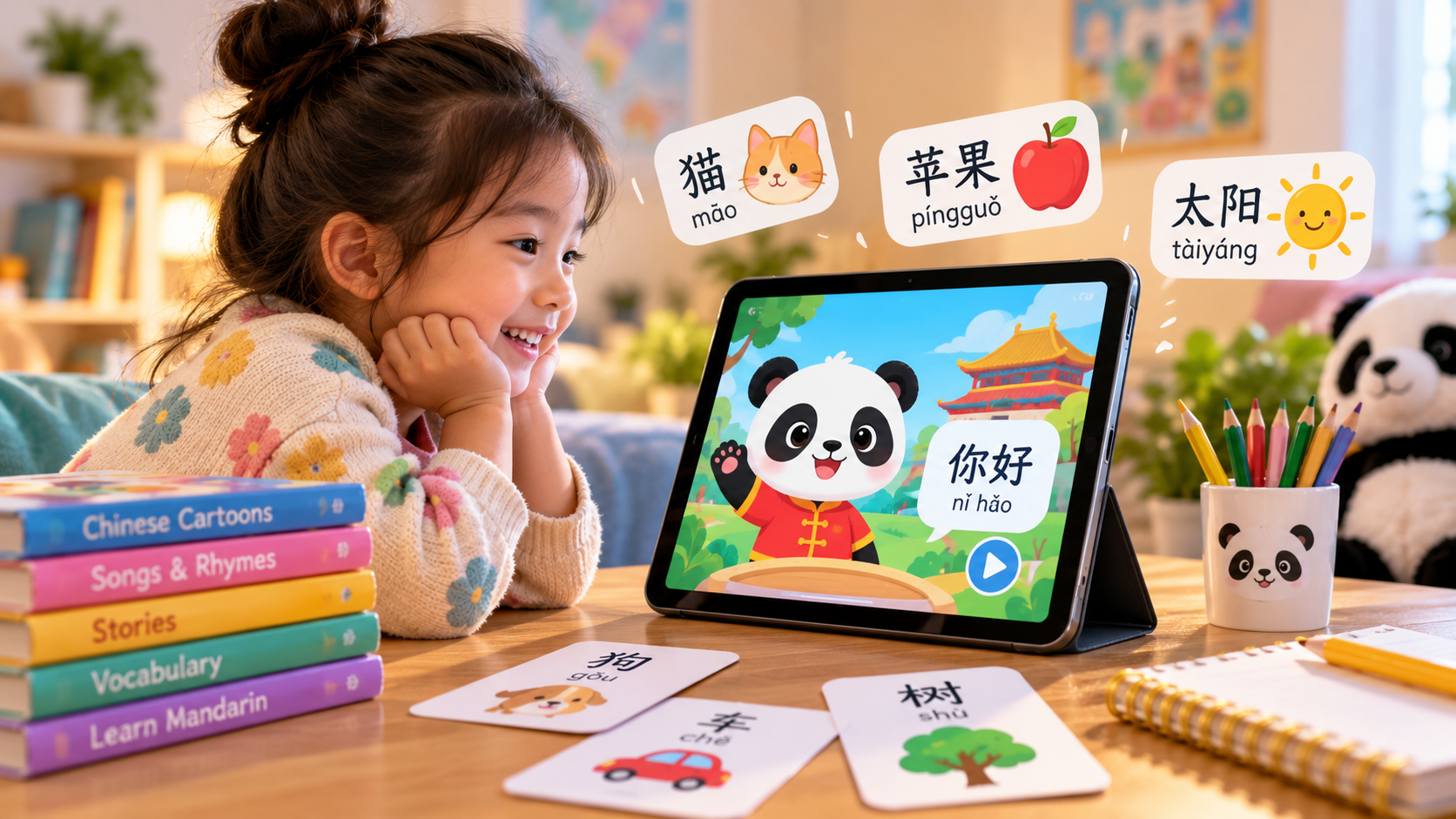
A Parent’s Guide to Learning Mandarin Through Cartoons, Stories, Songs and Interactive Activities
Learning a new language can be one of the most rewarding experiences for a child. Chinese, particularly Mandarin, opens the door to new cultures, friendships and future educational opportunities. However, for parents who don’t speak Chinese themselves, knowing where to begin can feel challenging.
The good news is that children don’t need to start with complicated grammar rules, lengthy vocabulary lists or traditional classroom exercises.
Instead, enjoyable activities such as cartoons, songs, storytelling and interactive games can help children become familiar with Mandarin naturally.
In this guide, we’ll explore the best ways for children to learn Chinese, how to introduce Mandarin at different ages and how digital learning platforms can support language development at home.
What Is the Best Way for Children to Learn Chinese?
The best way for children to learn Chinese is through regular, age-appropriate exposure to Mandarin, combining listening, speaking, cartoons, stories, songs and interactive activities. Short, enjoyable learning sessions help children recognise new vocabulary, become familiar with pronunciation and gradually develop confidence using the language.
For younger children, listening and speaking activities are particularly valuable because they introduce the sounds and rhythms of Mandarin before more formal reading and writing.
Older children can build on these foundations through structured vocabulary practice, character recognition and conversation.
Platforms such as hihilulu make learning Chinese for kids more accessible by combining immersive cartoons, interactive exercises and progressive learning activities in one environment.
Why Is Early Childhood a Good Time to Learn Mandarin?
Young children are naturally curious about sounds, words and communication.
During early childhood, language learning can be incorporated into everyday activities such as singing, playing, watching stories and talking with family members.
Introducing Mandarin at a young age gives children opportunities to become familiar with tones, pronunciation and commonly used expressions.
Unlike English, Mandarin uses tones to distinguish the meanings of spoken words. Hearing these sounds regularly can help children develop awareness of differences in pronunciation.
However, there’s no single age at which children must begin learning Chinese. Older children can also become successful language learners with appropriate teaching, motivation and consistent practice.
The most important factor is creating a positive learning environment that encourages children to participate without feeling pressured.
Can Children Learn Chinese by Watching Cartoons?
Yes. Watching Chinese-language cartoons can help children develop listening comprehension, recognise common expressions and become familiar with natural Mandarin pronunciation.
Cartoons are particularly useful because they combine spoken language with visual storytelling.
When a character points to an object, performs an action or expresses an emotion, children can begin connecting the words they hear with what they see.
This makes language more meaningful than memorising isolated vocabulary.
For example, a cartoon about animals might introduce Mandarin words for cats, dogs and birds, while a story about everyday routines could help children recognise greetings and simple instructions.
The hihilulu Chinese cartoon library offers a selection of Mandarin-language animations designed to support immersive learning.
Children can explore familiar animated programmes while hearing Chinese used in different situations. The platform includes cartoons alongside songs, vocabulary activities and interactive learning resources.
How to Make Chinese Cartoons More Educational
Rather than simply leaving a cartoon playing in the background, parents can encourage active participation.
After watching an episode, ask your child about the characters, repeat a new word together or encourage them to copy a simple expression.
Watching favourite episodes again can also be beneficial because repetition helps children recognise familiar vocabulary.
Even if parents don’t speak Mandarin, they can still show interest, celebrate progress and encourage children to practise.
How Do Chinese Songs Help Children Learn Mandarin?
Music is another effective way to introduce children to Chinese.
Songs combine rhythm, melody and repeated language, making words and phrases easier to remember.
For younger learners, nursery rhymes and action songs are particularly engaging because they connect language with movement.
A song about counting, for example, can introduce numbers while encouraging children to participate physically.
Chinese songs can also help children become familiar with sentence patterns and the sounds of Mandarin.
The hihilulu Chinese songs collection includes children’s music, nursery rhymes and educational songs suitable for introducing Mandarin through listening and repetition.
Parents can incorporate songs into daily routines, including playtime, car journeys and activities at home.
Why Are Stories Important When Learning Chinese?
Storytelling helps children understand language in context.
Rather than learning individual words without meaning, children hear vocabulary used within conversations, descriptions and familiar situations.
Picture books and animated stories are especially helpful because illustrations support understanding.
For example, a story about visiting a park might introduce words relating to trees, animals, colours and everyday activities.
As children become more confident, parents can encourage them to describe pictures, predict what happens next or repeat simple sentences.
The hihilulu Chinese stories library provides animated storytelling resources that allow children to experience Mandarin through engaging narratives.
Combining stories with songs and cartoons creates varied learning experiences that help maintain interest.
How Important Is Vocabulary Repetition?
Repetition is essential when learning any new language.
Children rarely remember every new word after hearing it once. Instead, vocabulary becomes more familiar through repeated exposure across different activities.
For example, the Mandarin word for apple, píngguǒ (苹果), might appear in a cartoon, a song, a vocabulary game and a conversation about food.
Encountering the same word in different situations helps children develop a stronger understanding of its meaning and use.
A practical approach is to introduce a small number of useful words at a time.
Parents might focus on themes such as:
-
Numbers, colours and shapes.
-
Family members and everyday greetings.
-
Animals, food and favourite toys.
-
Clothing, weather and daily routines.
-
Feelings, actions and simple questions.
Rather than rushing through large vocabulary lists, encourage children to use familiar words confidently before introducing more.
Can Children Learn Chinese Using an App?
Chinese learning apps can be valuable tools when they offer age-appropriate content, structured progression and opportunities for active participation.
The most useful apps go beyond passive video watching by encouraging children to listen, repeat, recognise vocabulary and practise what they’ve learned.
Interactive activities can help make language learning feel more like play than formal study.
For example, a child might hear a Mandarin word and select the matching picture or practise saying a phrase aloud.
The hihilulu learning platform for families combines animated content with interactive exercises, progress tracking and activities designed for young learners.
Its progressive approach introduces commonly used vocabulary through familiar themes, helping children build on what they’ve already learned.
However, apps work best as part of a balanced learning routine that also includes conversation, creative activities and opportunities to use language away from a screen.
What Is the Best Way to Teach Chinese at Different Ages?
Children benefit from different approaches depending on their age, interests and existing language abilities.
| Age group | Recommended learning approach |
|---|---|
| Ages 2–4 | Short songs, nursery rhymes, picture books and playful listening activities with adult support |
| Ages 5–7 | Animated stories, vocabulary games, simple conversations and repeated phrases |
| Ages 8–10 | Structured lessons, interactive exercises, character recognition and everyday conversations |
| Ages 11–12 | Reading practice, writing, listening comprehension and increasingly independent learning |
These age ranges are general guidance rather than strict rules. Every child develops at their own pace.
For younger children, enjoyment and familiarity are more important than formal achievement.
As children grow, structured activities can gradually introduce more complex vocabulary, Chinese characters and conversational skills.
How Often Should Children Practise Chinese?
Consistency is usually more helpful than occasional lengthy lessons.
For beginners, a short daily routine can provide regular exposure without making learning feel overwhelming.
A simple 15-minute activity might include:
Example daily Mandarin learning routine
5 min
Watch a short Chinese cartoon
Listen to familiar vocabulary in context.
5 min
Play a vocabulary game
Practise recognising words and phrases.
5 min
Sing or practise speaking
Repeat familiar expressions together.
Illustrative routine for children comfortable with this amount of activity. Adapt the duration to their age, attention and interests.
Regular practice can help children develop familiarity and confidence over time.
The goal should be to establish an enjoyable habit rather than completing a fixed number of lessons.
Do Parents Need to Speak Chinese to Help Their Children Learn?
No. Parents don’t need to speak Mandarin fluently to support their child’s learning.
Although speaking Chinese at home can provide additional practice opportunities, families without previous Mandarin experience can still create an encouraging learning environment.
Parents can watch cartoons with their children, listen to songs together and participate in simple vocabulary activities.
Learning a few words alongside your child can also make the experience more enjoyable.
For families looking for additional guidance, hihilulu’s family learning programmes include digital resources and access to live online Mandarin lessons.
This allows children to benefit from structured language support even when Chinese isn’t spoken at home.
Frequently Asked Questions About Learning Chinese for Kids
Is Mandarin difficult for children to learn?
Mandarin has some unfamiliar features, including tones and Chinese characters, but children can develop their skills gradually through suitable teaching and regular practice. Starting with listening, speaking and familiar vocabulary can make the learning process more approachable.
Should children learn to speak Chinese before writing characters?
For many young beginners, focusing initially on listening and speaking is helpful. Reading and character recognition can then be introduced progressively, although children can also enjoy exploring simple written characters from an early stage.
Are Chinese cartoons enough to become fluent?
Cartoons can support listening and vocabulary development, but fluency also requires opportunities to speak, interact, practise and receive feedback. A combination of activities is generally more effective than watching videos alone.
What is the best Chinese learning app for children?
Look for an app that combines age-appropriate Mandarin content, interactive activities, structured vocabulary progression and opportunities for speaking practice. hihilulu provides these features alongside cartoons and learning resources designed specifically for children.
Help Your Child Learn Chinese With hihilulu
The best way for children to learn Chinese is to make Mandarin a familiar, enjoyable part of everyday life.
Cartoons, stories, songs, interactive games and regular vocabulary practice can all contribute to developing listening comprehension, pronunciation and confidence.
By combining these activities with age-appropriate learning resources, parents can help children build strong foundations without making language learning feel like a chore.
At hihilulu, we believe children learn best when they’re curious, engaged and enjoying themselves.
Our immersive Mandarin learning platform brings together animated content, interactive exercises and structured learning opportunities to help children explore Chinese at their own pace.
Discover Chinese learning for families and give your child an enjoyable introduction to Mandarin.