
Learning Mandarin can give children a valuable skill that stays with them throughout their lives. However, parents who do not speak Chinese themselves can understandably wonder where to begin.
What is the best way for kids to learn Chinese?
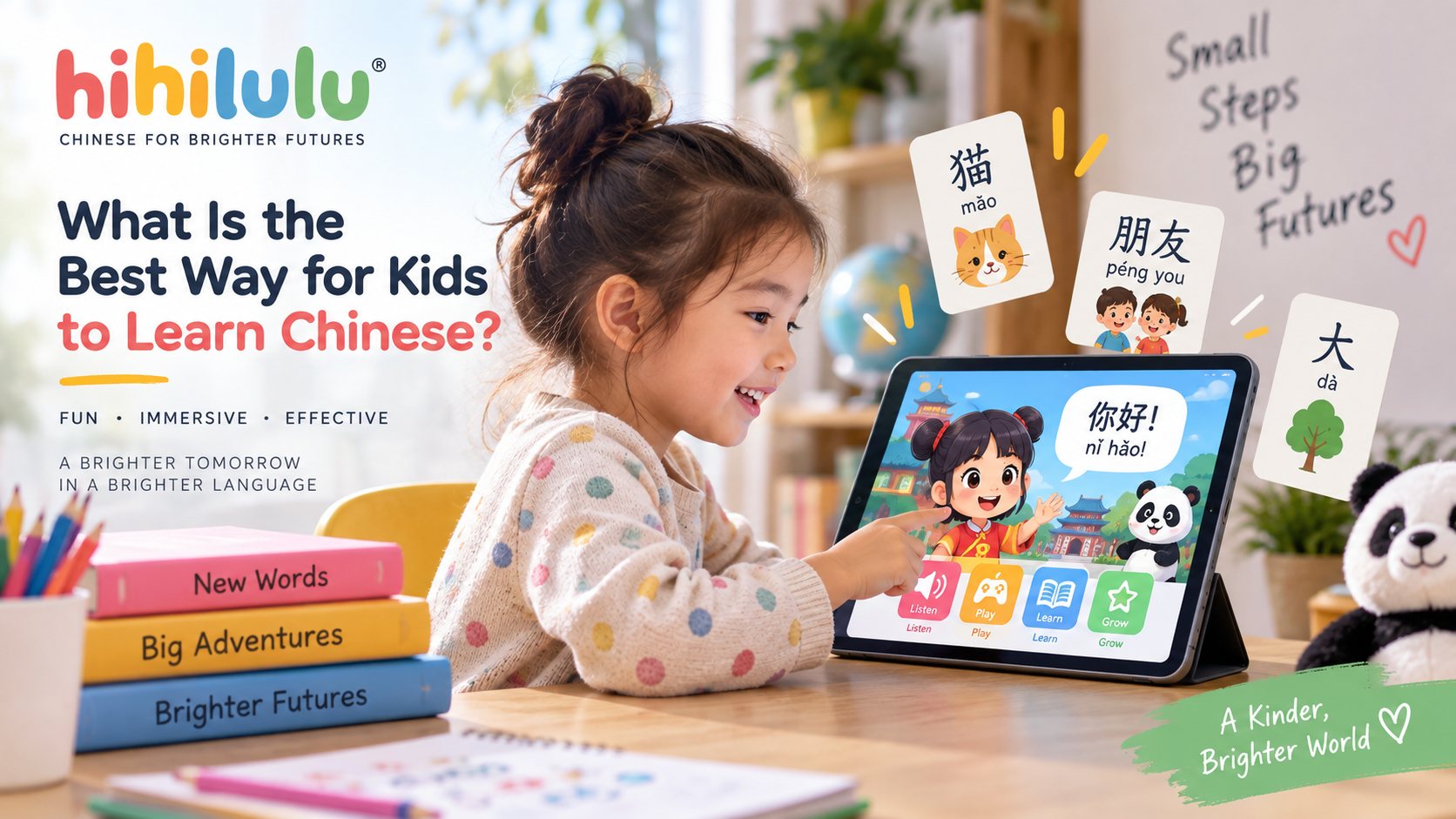
For most children, the best approach combines regular exposure to spoken Mandarin with immersive content, interactive activities, age-appropriate Chinese cartoons and structured learning. A Chinese learning app for kids can bring these elements together, allowing children to hear, practise and interact with Mandarin regularly rather than relying solely on memorising vocabulary.
The key is making Chinese part of a child’s routine while keeping the experience engaging enough that they actually want to continue learning.
Why Is Immersion Important When Kids Learn Chinese?
Immersion means exposing children to Mandarin in meaningful situations rather than teaching every word through direct translation.
Think about how children learn their first language. They hear words repeatedly in conversations, stories, songs and everyday situations. Over time, they begin to associate sounds with objects, actions and ideas.
A similar principle can be applied when children are learning Mandarin.
Rather than constantly switching between Chinese and English, immersive resources allow children to become familiar with the sounds, rhythm and structure of Mandarin.
This is one of the principles behind hihilulu’s approach to learning Chinese for kids. Its platform combines animations, games and other resources to create an immersive environment in which children encounter Mandarin in different contexts.
Regular exposure is important. A short Mandarin activity several times throughout the week can be more manageable for a young learner than relying on occasional lengthy study sessions.
Can Children Learn Chinese Through Cartoons?
Cartoons can be a highly engaging way of increasing a child’s exposure to Mandarin.
The visual context helps children connect spoken words with characters, objects and actions on screen. Instead of simply hearing an unfamiliar word, they can see what is happening at the same time.
This provides clues about meaning.
For example, if a character picks up an apple while saying the Chinese word for apple, the child has both an audio and visual reference.
Repetition also happens naturally in children’s programmes. Common greetings, questions, actions and phrases may appear repeatedly across different episodes.
A dedicated library of Chinese cartoons for kids can therefore make Mandarin exposure feel more like entertainment than traditional study.
hihilulu’s library combines animated content with listening, speaking and interactive resources designed specifically for young learners.
Is Watching Chinese Cartoons Enough to Learn Mandarin?
Cartoons are a useful learning tool, but watching them should ideally form part of a wider learning experience.
Passive exposure helps children become familiar with Mandarin, but opportunities to actively use what they have heard can strengthen the learning process.
After watching a cartoon, children might repeat a new phrase, identify an object using its Chinese name or complete an interactive activity based on vocabulary from the programme.
The objective is to move gradually from simply hearing Mandarin to understanding and using it.
Combining cartoons with games, speaking activities and structured lessons gives children more opportunities to practise the language in different ways.
How Can Interactive Activities Help Children Learn Mandarin?
Young children generally respond well to learning activities that require them to participate.
Rather than simply reading vocabulary from a page, interactive exercises can ask children to listen, select, match, speak or respond.
Activities might include:
- Matching Chinese words to pictures
- Listening and choosing the correct answer
- Repeating Mandarin words and phrases
- Completing puzzles
- Playing vocabulary games
- Singing Chinese songs
- Practising character recognition
- Completing simple writing exercises
- Following instructions in Mandarin
These activities turn language learning into something the child actively does.
hihilulu combines animations with gamified and interactive exercises so children can practise vocabulary and other language skills after encountering them in context.
Are Chinese Learning Apps Good for Kids?
A well-designed Chinese learning app for kids can be an effective way to provide regular access to Mandarin at home.
Apps are particularly helpful for families where parents do not speak Chinese.
Instead of parents having to design lessons or determine which vocabulary should come next, a structured platform can provide age-appropriate resources and progression.
Good Chinese learning apps should go beyond simple digital flashcards.
Look for an app that incorporates different aspects of language development, including listening, speaking, vocabulary, pronunciation and character recognition.
It should also be designed specifically for children rather than simply offering an adult language course with colourful graphics added to it.
Most importantly, children should enjoy using it.
If a child sees Mandarin practice as an enjoyable activity rather than homework, it becomes much easier to establish regular learning habits.
How Often Should Children Practise Chinese?
Consistency is more important than trying to fit everything into one long lesson.
Regular exposure helps keep Mandarin familiar.
Depending on the child’s age and concentration span, this could mean relatively short sessions involving cartoons, games, songs or structured learning activities throughout the week.
Parents can also introduce small amounts of Mandarin into everyday routines.
For example, children could practise numbers while counting toys, colours while drawing or food vocabulary around mealtimes.
The objective is not to turn every moment into a formal language lesson.
Instead, it is about making Mandarin something children encounter regularly and naturally.
Should Kids Learn Speaking or Chinese Characters First?
Mandarin presents a particular challenge because learning the spoken language and learning Chinese characters involve different skills.
For young beginners, building familiarity with spoken Mandarin can provide an important foundation.
Children can begin recognising common words, understanding simple phrases and developing confidence with pronunciation before being expected to master large numbers of written characters.
Written Chinese can then be introduced progressively.
hihilulu uses its Snowballing Method to introduce children to 125 core visual components before gradually progressing towards characters, words, phrases and sentences.
This type of progressive approach can make written Chinese feel less overwhelming for young learners.
How Can Parents Help If They Don’t Speak Chinese?
You do not need to speak Mandarin yourself to support your child’s learning.
Your role can be to create opportunities for regular exposure and encourage them to continue.
A parent might sit with their child while they watch a Mandarin cartoon, ask what they learnt afterwards or encourage them to demonstrate a new word.
You can also use structured resources that provide the Mandarin language input for you.
hihilulu’s Chinese learning resources for families are specifically designed to allow children to experience Mandarin through animated content, courses and interactive learning, even when their parents do not speak Chinese.
Parents can therefore focus on encouragement, routine and participation rather than having to become the teacher.
What Should You Look for in a Chinese Learning App?
There are many language apps available, but children’s learning needs are different from those of adults.
When choosing an app to help your child learn Mandarin, consider whether it provides:
Age-appropriate content: Activities should match your child’s stage of development and attention span.
Immersive Mandarin exposure: Children should have plenty of opportunities to hear natural spoken Chinese.
Interactive activities: Look for exercises that encourage children to respond rather than simply watch.
Progressive learning: Content should become more advanced as the child’s skills develop.
Speaking practice: Hearing Mandarin is important, but children should also be encouraged to reproduce sounds, words and phrases.
Engaging content: Cartoons, games, stories and songs can help keep younger learners interested.
Progress tracking: Parents may find it useful to see how frequently their child is learning and how their skills are developing.
hihilulu’s family platform includes animated Mandarin content, interactive learning and progress tracking, providing parents with a way to follow their child’s learning journey.
What Age Should Kids Start Learning Chinese?
There is no single age at which every child must begin learning Mandarin.
However, younger children are often particularly receptive to learning through imitation, repetition, songs, stories and play.
Early exposure can also give children more time to become comfortable with Mandarin before language learning becomes associated with formal study or examinations.
The approach should always reflect the child’s age.
A very young child might spend more time listening to Chinese cartoons, songs and simple vocabulary.
Older children may benefit from a more structured combination of listening, speaking, reading, writing and interactive exercises.
Can Children Learn Chinese Online?
Yes. Online learning can make Mandarin much more accessible, particularly for families without a local Chinese teacher or school programme.
Children can use apps and digital resources for independent learning while also taking part in structured online lessons.
For families who want additional teacher support, online Mandarin lessons for kids can combine digital learning with live tuition.
hihilulu’s private courses use qualified Mandarin teachers alongside its learning platform and supporting materials, allowing children to follow a more structured learning programme from home.
This blended approach can be particularly useful as a child progresses and needs more opportunities for conversation and personalised feedback.
What Is the Best Way to Learn Chinese for Kids?
There is no single activity that will teach a child everything they need to know.
The most effective approach is to create a balanced learning environment.
Children need opportunities to hear Mandarin regularly, understand vocabulary in context, interact with the language and gradually develop speaking, reading and writing skills.
That might include watching Mandarin cartoons one day, completing an interactive activity the next and practising with a teacher or parent later in the week.
Most importantly, learning should remain enjoyable.
Children are much more likely to continue practising a language when they associate it with interesting stories, games, characters and activities rather than repetitive memorisation.
Make Mandarin Part of Everyday Learning
Helping your child learn Chinese does not require recreating a classroom at home.
Start by making Mandarin accessible.
Introduce engaging Chinese cartoons, songs and games. Encourage children to repeat the words they hear. Use interactive activities to reinforce their understanding and introduce structured learning gradually as their confidence grows.
A platform designed specifically to help children learn Chinese can bring these different elements together in one learning environment.
hihilulu combines immersive Mandarin content, animations, interactive activities and structured learning resources designed for young learners. Its family options include a cartoon library, at-home digital learning and private Mandarin tuition, giving families different ways to build Chinese into their child’s routine.
Explore hihilulu Chinese learning for kids and discover a fun, immersive way to introduce your child to Mandarin.